
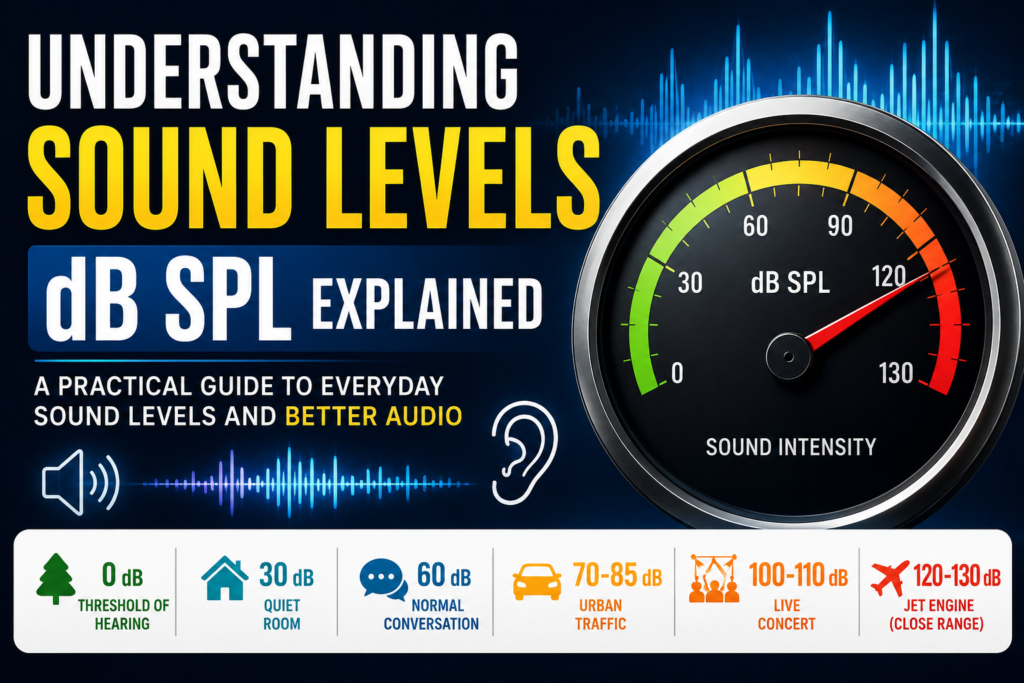
Whether you’re working in a recording studio, attending a live concert, or simply listening to music through headphones, you’re constantly exposed to different sound levels. Yet many people are unfamiliar with how sound is measured and what decibels actually mean.
Understanding sound levels is essential not only for better audio production but also for protecting your hearing over time.
What Is a Decibel?
A decibel, abbreviated as dB, is the unit used to measure sound intensity.
The higher the number of decibels, the louder the sound.
In acoustics, sound is commonly measured in dB SPL (Sound Pressure Level), which represents the acoustic pressure generated by a sound source.
Common Sound Level Examples
Here are some typical sound levels you may encounter in everyday life:
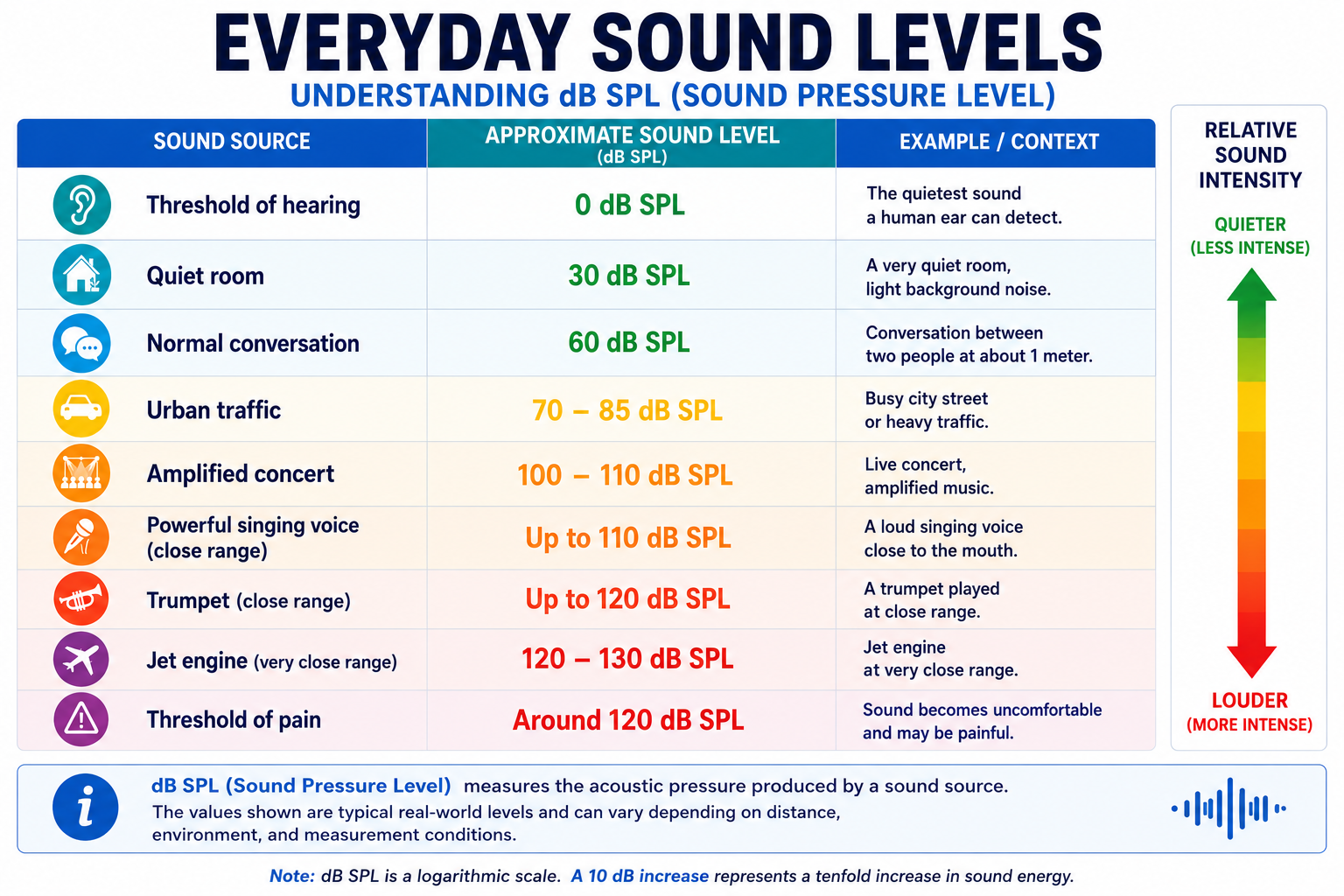
These values are approximate and may vary depending on distance and measurement conditions.
The Threshold of Hearing
The threshold of hearing is the quietest sound a person with normal hearing can detect.
This reference point is defined as 0 dB SPL.
At this level, air vibrations are extremely small but still detectable by the human ear.
The Threshold of Pain
At the opposite end of the scale lies the threshold of pain.
This level is generally considered to be around 120 dB SPL.
Long exposure to sounds at or above this level can lead to hearing fatigue and potentially permanent hearing damage.
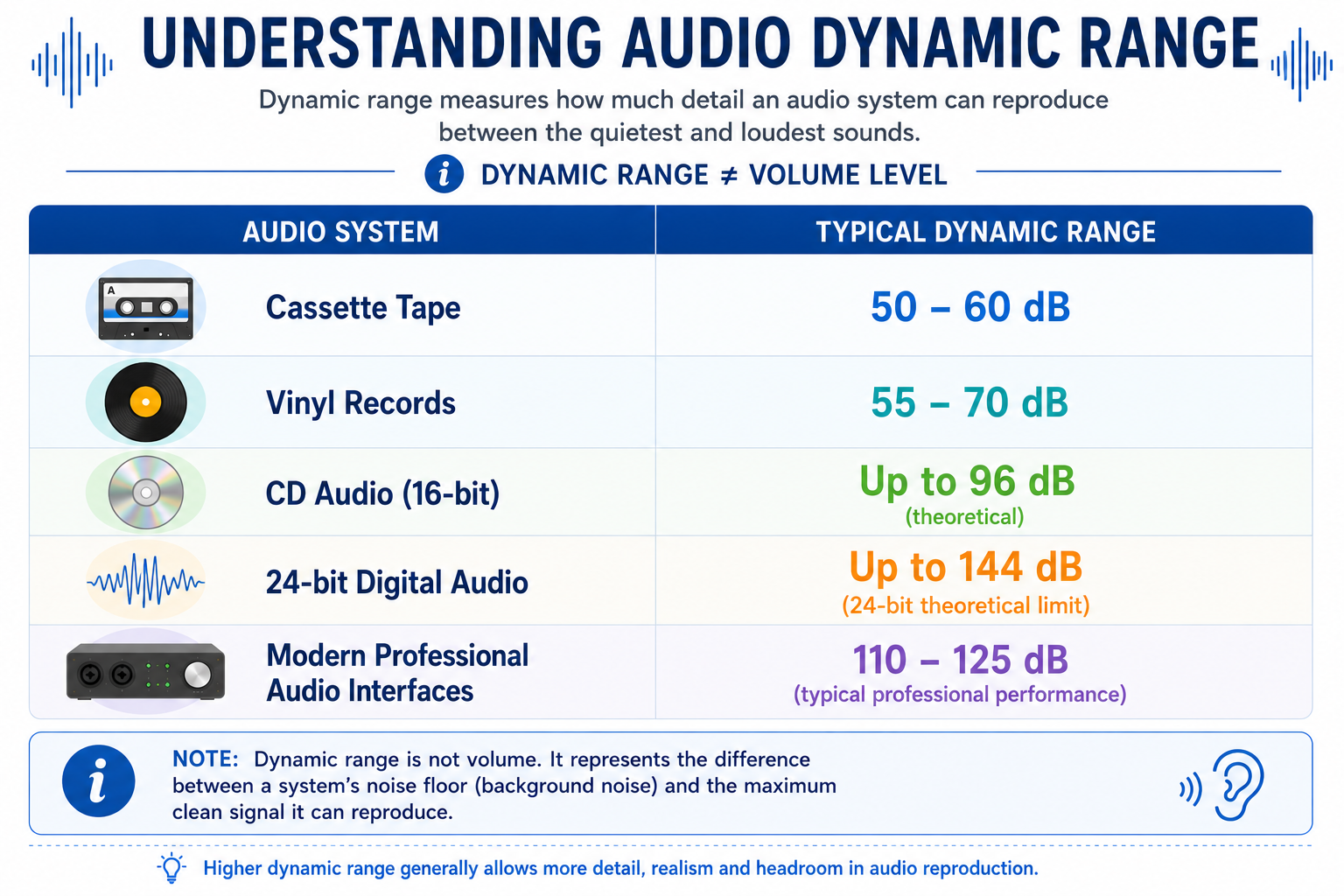
Understanding Audio Dynamic Range
When listening to music, some parts may be very quiet while others are much louder and more energetic.
The difference between the softest and loudest moments is known as dynamic range.
A wide dynamic range gives music more depth, emotion and realism.
When audio is heavily compressed, everything tends to sound equally loud, which can make listening less enjoyable over time.
Audio Signal Levels
In professional audio equipment, signal levels are often measured in dBu.
The standard reference is:
0 dBu = 0.775 Volt
Professional audio systems also provide a safety margin known as headroom.
Headroom allows equipment to handle sudden peaks without distortion or clipping.
Background Noise
No audio system is completely silent.
Electronic components always generate a small amount of background noise.
The goal of high-quality equipment is to keep this noise as low as possible to preserve signal clarity.
What Is Clipping?
Clipping occurs when a signal exceeds the maximum level an audio device can handle.
The result may be distortion, loss of detail, and reduced sound quality.
This is why audio engineers carefully monitor recording and mixing levels.
Why Understanding Sound Levels Matters
Learning how sound levels work can help you:
- Achieve cleaner recordings.
- Improve your mixes.
- Avoid clipping and distortion.
- Preserve dynamic range.
- Protect your hearing.
Whether you’re a musician, podcaster, content creator or audio engineer, understanding these concepts is essential for producing professional-quality audio.
Conclusion
Sound levels play a fundamental role in every aspect of audio production and listening.
By understanding decibels, dynamic range and hearing limits, you can make better audio decisions while protecting your hearing for years to come.
At Soundustry, we always recommend working at reasonable listening levels to maintain accurate monitoring and long-term hearing health.