

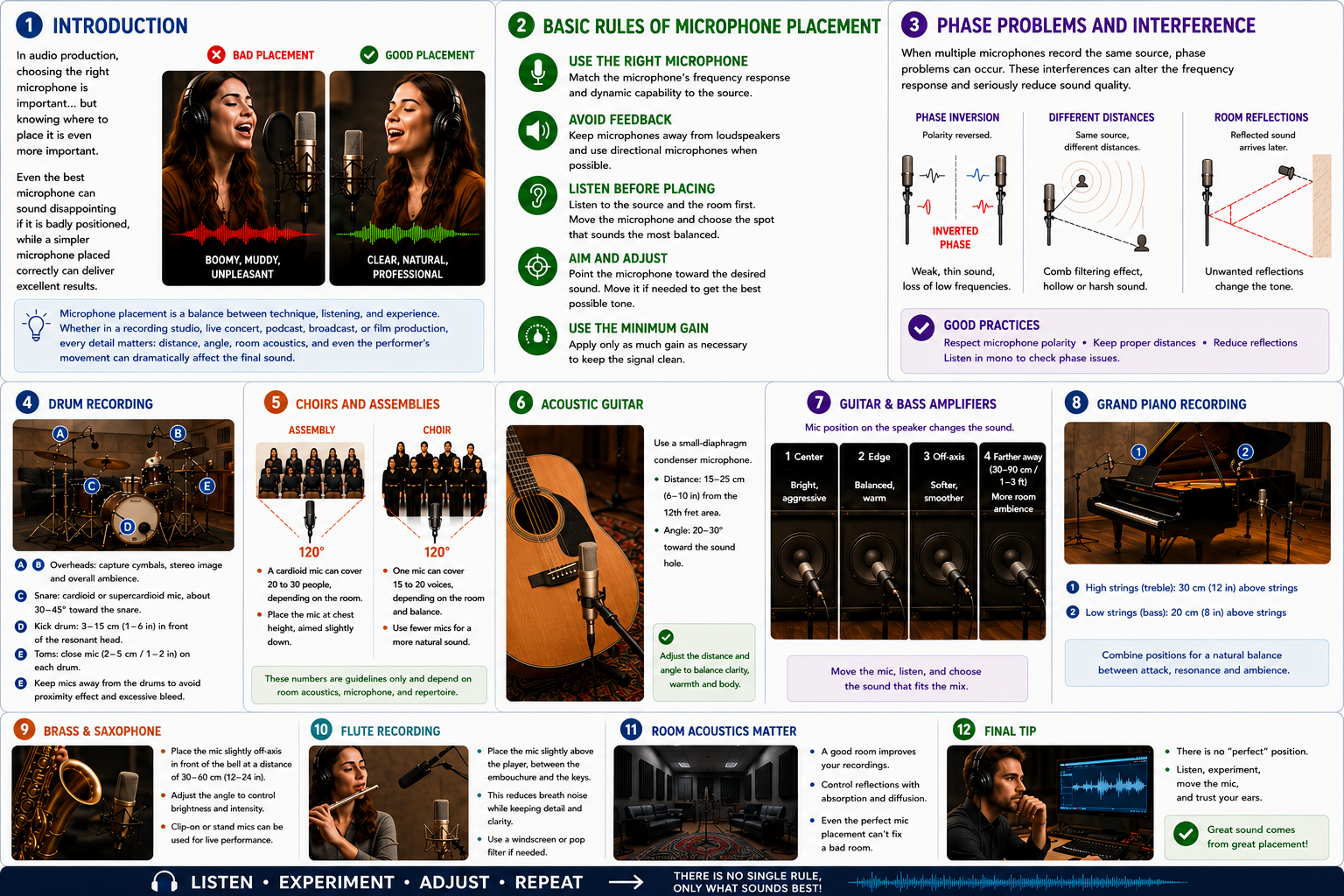
In audio production, choosing the right microphone is important… but knowing where to place it is even more important. Even the best microphone can sound disappointing if it is badly positioned, while a simpler microphone placed correctly can deliver excellent results.
Microphone placement is a balance between technique, listening, and experience. Whether in a recording studio, live concert, podcast, broadcast, or film production, every detail matters: distance, angle, room acoustics, and even the performer’s movement can dramatically affect the final sound.
Understanding Sound Capture
A microphone does not simply record an instrument or a voice. It also captures:
- room acoustics,
- reflections,
- resonances,
- background noise,
- and sometimes even the emotional atmosphere of a performance.
This is why there is no universal microphone position. Every recording situation requires a different approach depending on:
- the microphone type,
- the instrument,
- the musical style,
- and the desired sound character.
A warm, aggressive, intimate, or natural sound can often be achieved by moving a microphone only a few centimeters.
Essential Rules of Microphone Placement
Before starting any recording session, several important principles should always be respected.
Use the Right Microphone
Every sound source has its own frequency range and dynamic behavior. A microphone designed for vocals will not react the same way as a microphone intended for kick drums or cymbals.
Avoid Feedback and Unwanted Noise
The closer a microphone is to loudspeakers, the greater the risk of feedback. Directional microphones also help reduce:
- background noise,
- bleed from nearby instruments,
- and unwanted room reflections.
Listen Before Positioning
One of the most common mistakes is placing microphones without truly listening to the instrument inside the room.
A skilled audio engineer first listens carefully to:
- where the instrument sounds most balanced,
- how the room reacts,
- and where the desired tonal character naturally exists.
Only then does microphone placement become meaningful.
Phase Problems and Microphone Interference
When several microphones record the same sound source, phase problems may occur. These interferences can seriously affect audio quality and alter the frequency response.
One of the most common issues is comb filtering, caused by:
- microphones placed at different distances,
- acoustic reflections,
- or polarity inversion.
The result can make the sound feel:
- hollow,
- thin,
- harsh,
- or weak in low frequencies.
Proper microphone spacing and polarity management are therefore essential for professional recordings.
Drum Recording
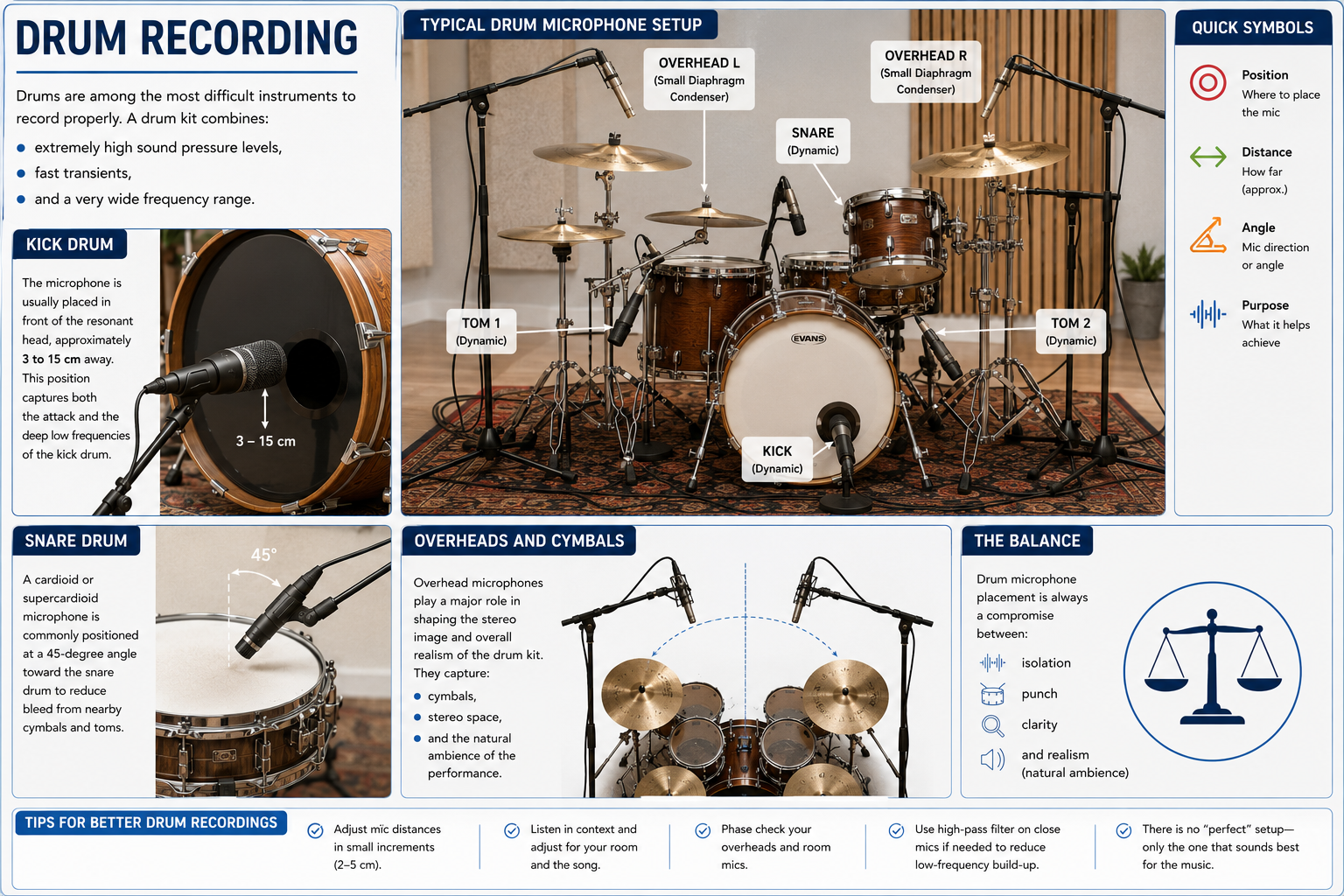
Drums are among the most difficult instruments to record properly. A drum kit combines:
- extremely high sound pressure levels,
- fast transients,
- and a very wide frequency range.
Kick Drum
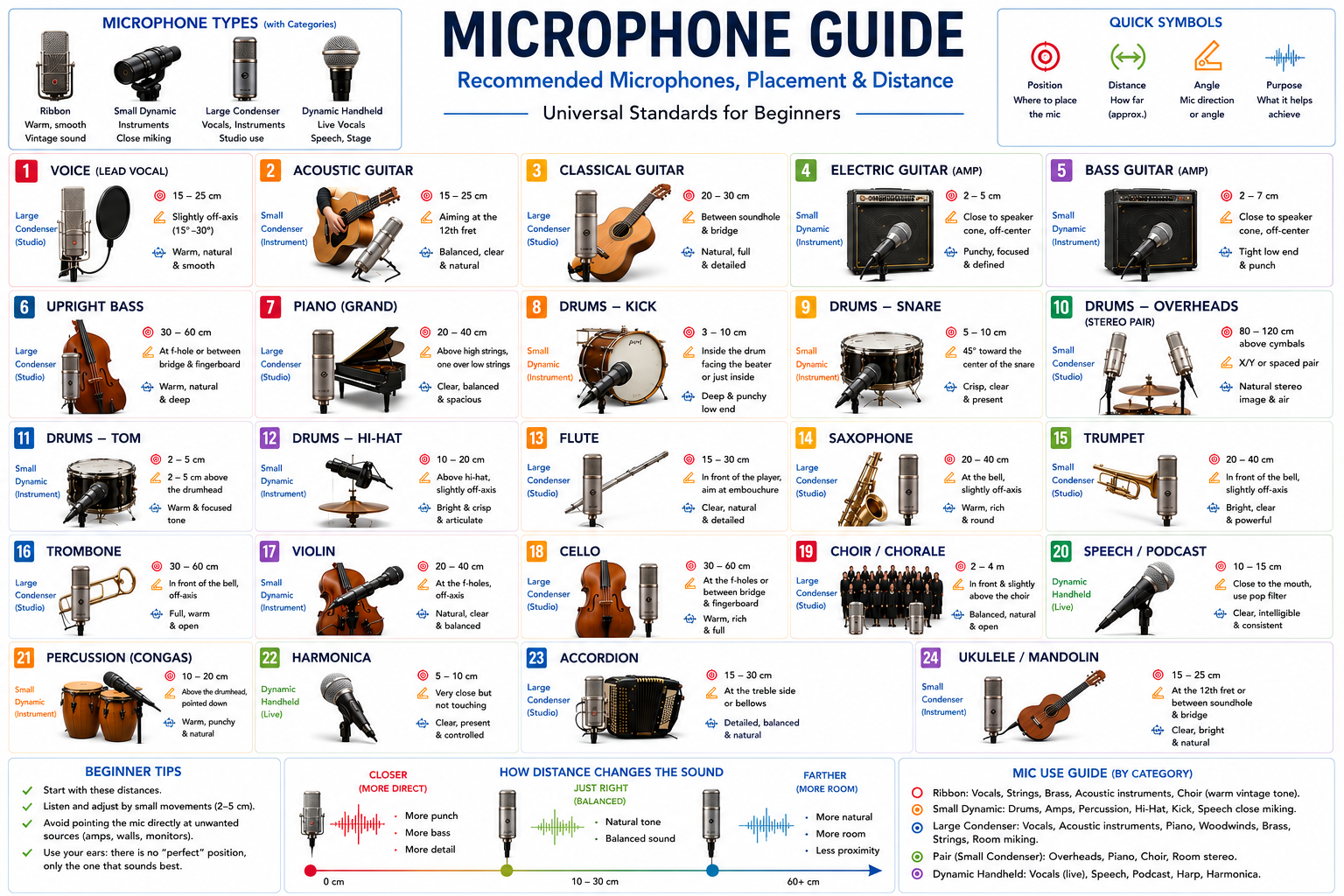
The microphone is usually placed in front of the resonant head, approximately 3 to 15 cm away. This position captures both the attack and the deep low frequencies of the kick drum.
Snare Drum
A cardioid or supercardioid microphone is commonly positioned at a 45-degree angle toward the snare drum to reduce bleed from nearby cymbals and toms.
Overheads and Cymbals
Overhead microphones play a major role in shaping the stereo image and overall realism of the drum kit. They capture:
- cymbals,
- stereo space,
- and the natural ambience of the performance.
Drum microphone placement is always a compromise between:
- isolation,
- punch,
- clarity,
- and realism.
Choir and Conference Recording
When recording choirs or assemblies, the goal is to maintain natural intelligibility while covering multiple voices evenly.
A properly positioned cardioid microphone can cover many people efficiently.
However, using too many microphones may create:
- phase problems,
- excessive room noise,
- and a less natural sound image.
In many situations, fewer microphones actually produce better results.
Acoustic String Instruments
Acoustic guitars and other string instruments are highly sensitive to microphone placement.
- near the sound hole: warmer and bass-heavy sound,
- near the bridge: more precision and articulation,
- above the instrument: more balanced and natural tone.
Even very small movements can dramatically affect:
- low-end response,
- string noise,
- stereo depth,
- and tonal balance.
The ideal placement always depends on the musical style and the emotional character desired in the recording.
Electric Guitar and Bass Amplifiers
Recording a guitar amplifier is one of the most creative aspects of audio engineering.
Small microphone movements across the speaker cone can completely transform the tone:
- centered on the speaker: brighter and more aggressive,
- off-axis: smoother and warmer,
- farther away: more room ambience and depth.
Microphone placement therefore becomes an artistic tool for shaping the final sound.
Grand Piano Recording
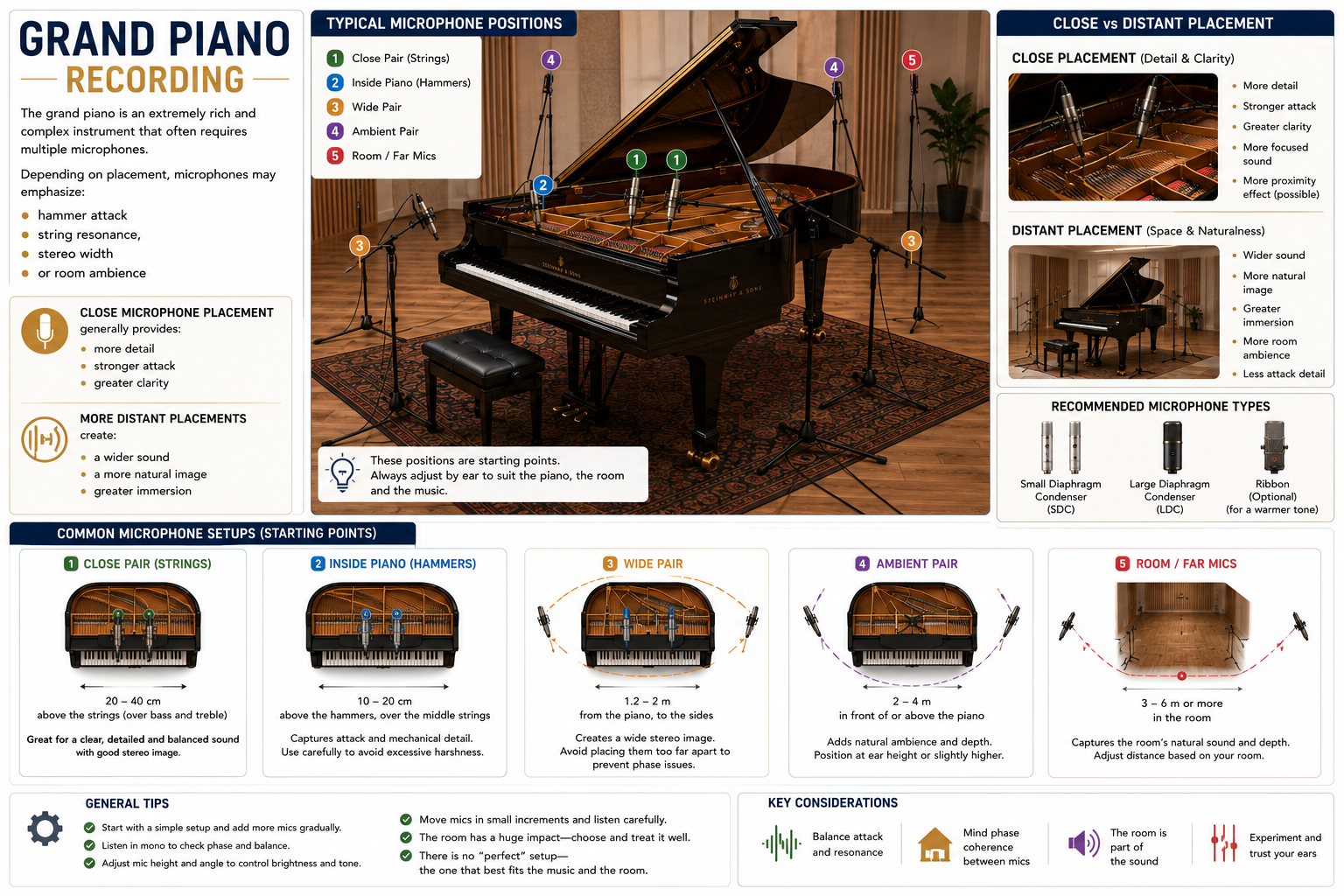
The grand piano is an extremely rich and complex instrument that often requires multiple microphones.
Depending on placement, microphones may emphasize:
- hammer attack,
- string resonance,
- stereo width,
- or room ambience.
Close microphone placement generally provides:
- more detail,
- stronger attack,
- and greater clarity.
More distant placements create:
- a wider sound,
- a more natural image,
- and greater immersion.
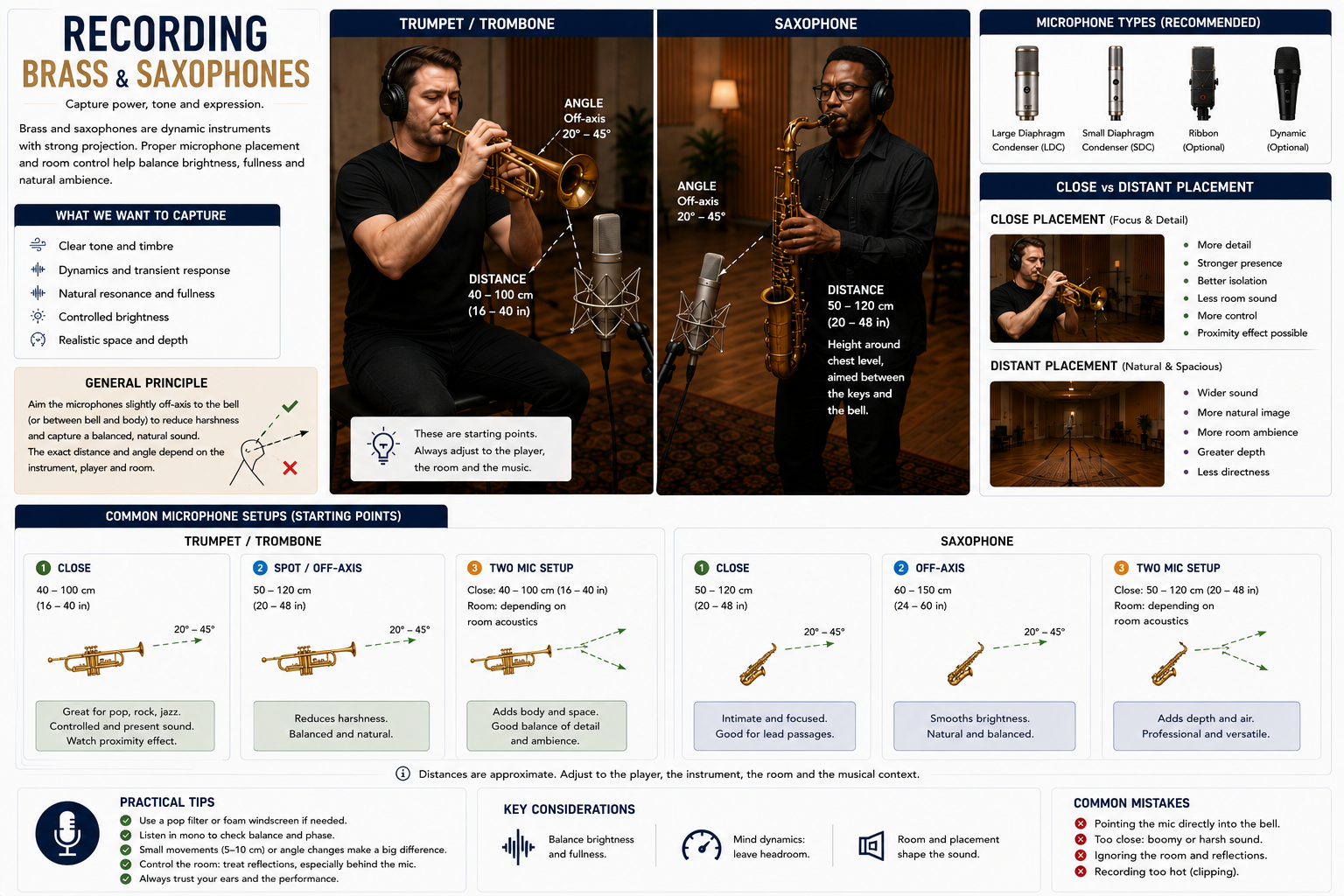
Recording Brass and Saxophones
Brass instruments and saxophones project sound strongly forward, making microphone direction extremely important.
A microphone placed directly in front of the bell produces:
- a powerful,
- detailed,
- and highly present sound.
A slightly off-axis position often creates a smoother and more balanced tone.
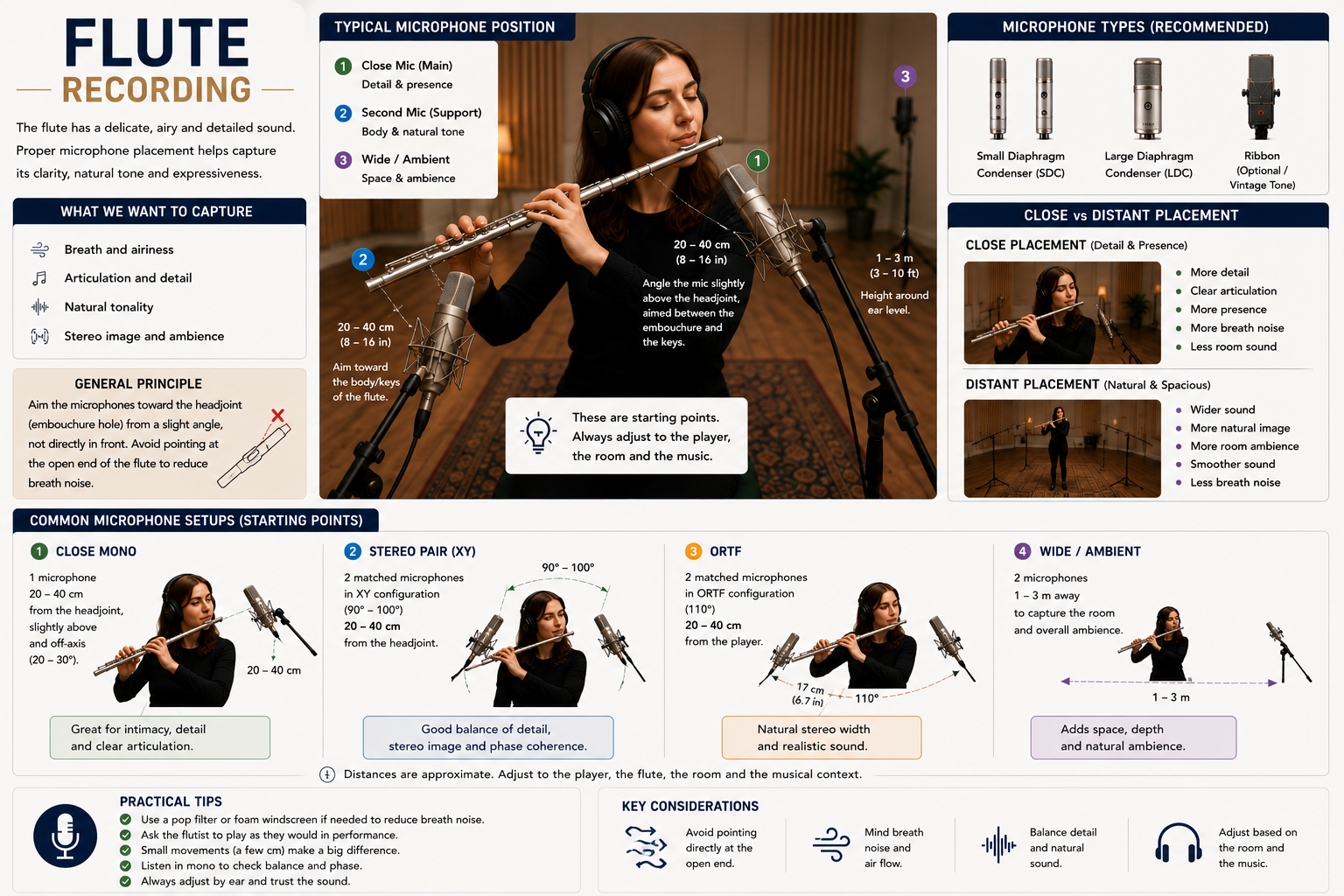
Flute Recording
The sound of a flute mainly comes from the embouchure and the first open tone hole.
The microphone is usually placed:
- slightly above the performer,
- between the embouchure and the keys,
- to reduce breath noise while preserving clarity and detail.
Using a windscreen or pop filter can also improve recording quality.
Conclusion
Microphone placement is far more than a technical process it is a creative art.
Understanding:
- microphone behavior,
- room acoustics,
- phase interaction,
- and instrument projection
allows engineers to transform an ordinary recording into a professional, natural, and emotionally engaging sound experience.
In audio production, there is no single “perfect” microphone position. The best approach will always be:
listen carefully, experiment, and refine every detail until the sound feels right.