
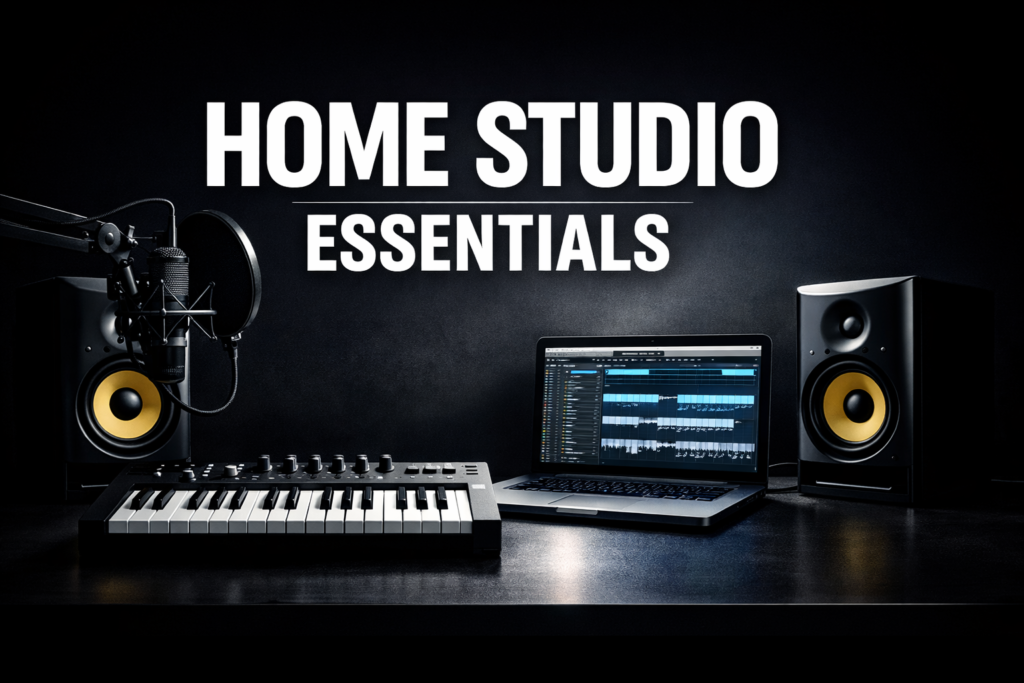
Building a home studio used to feel like a distant dream reserved for professional facilities and large budgets. Today, it can begin in a small room, a quiet corner, or wherever you can create without distraction.
What hasn’t changed is the confusion beginners feel when facing endless gear lists and recommendations.
So let’s simplify things.
If you want to record, produce, or mix from home, you don’t need everything — you need the right foundations.
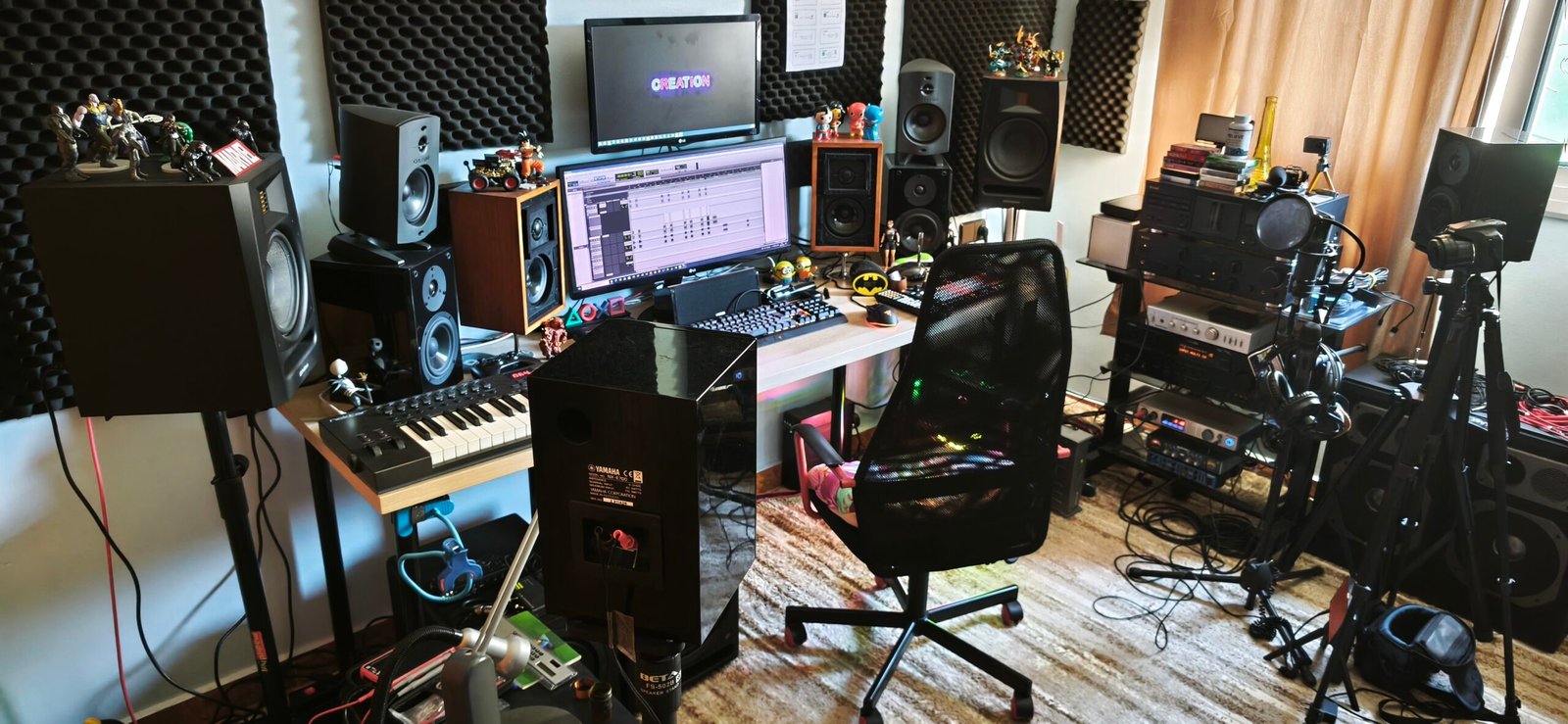
Start with a reliable computer
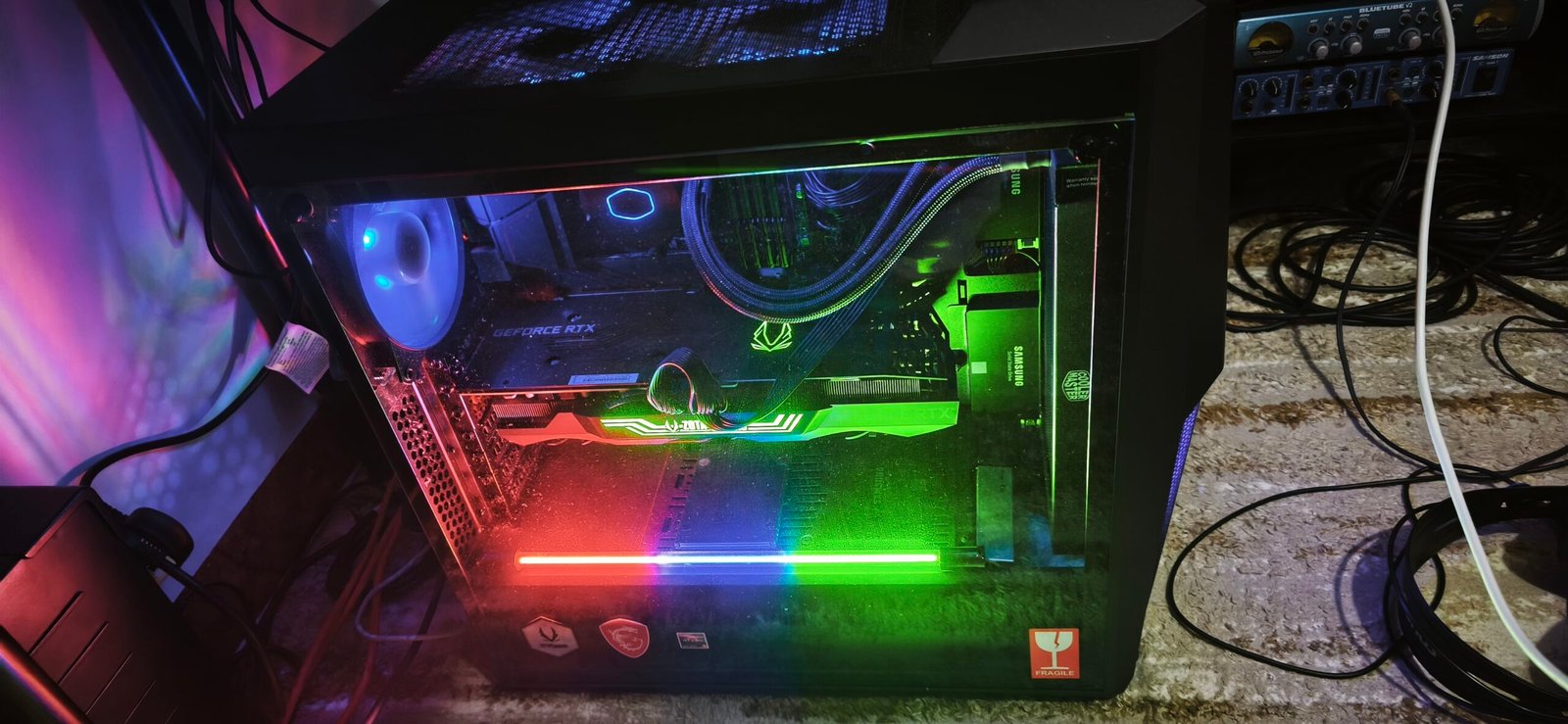
Your computer is the center of your entire workflow. It handles recording, processing, and mixing, so stability matters more than raw power.
A modern processor, sufficient RAM, and a solid-state drive will keep sessions smooth and frustration low. Silence is also important — a noisy fan can ruin recordings and concentration alike.
You don’t need the most expensive machine. You need one that works consistently.
An audio interface: the bridge between sound and your computer
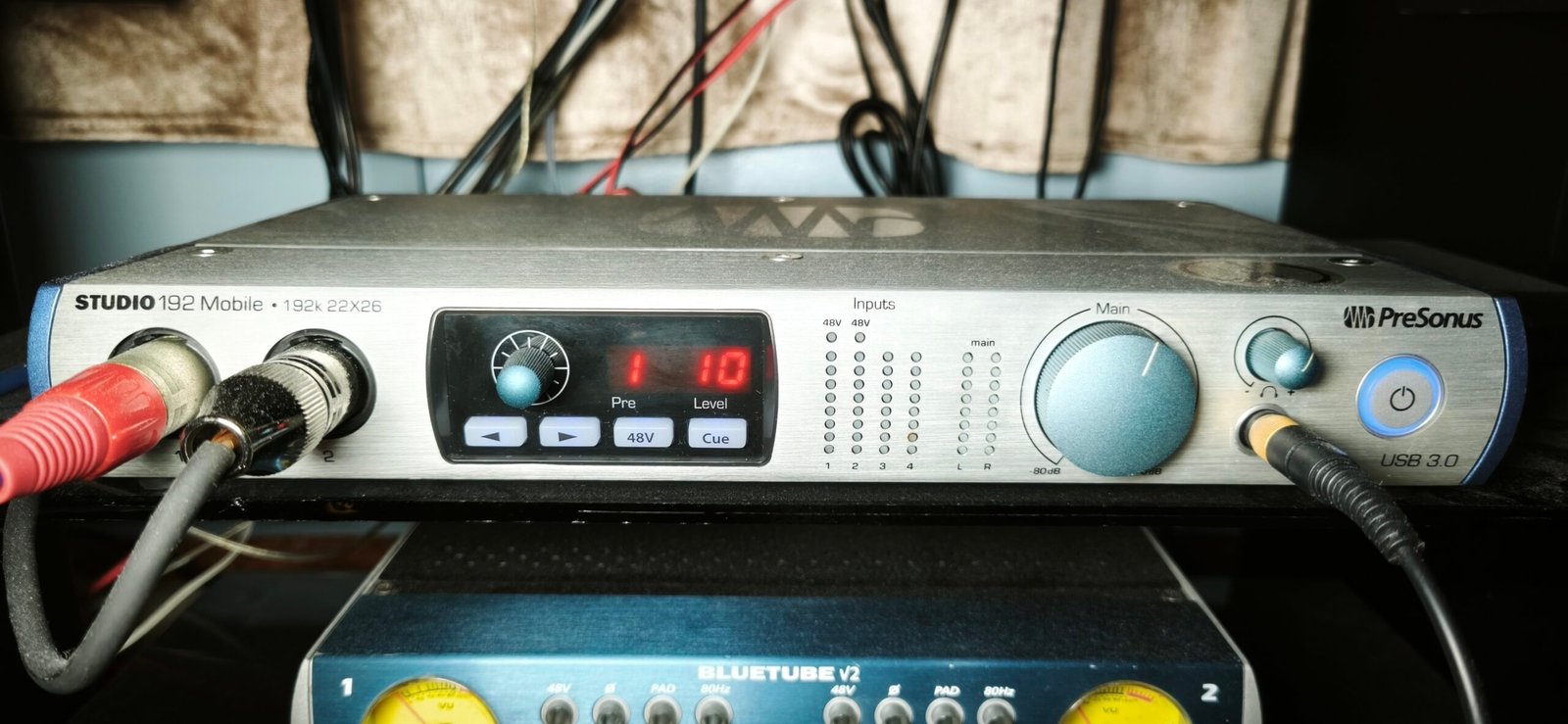
An audio interface converts sound into digital information your computer understands — and back again.
Compared to built-in sound cards, it offers cleaner audio, better dynamic range, and lower latency.
It allows you to connect microphones, instruments, and studio monitors while maintaining clarity and precision.
For most beginners, a simple two-input interface is more than enough.
A microphone suited to your voice and environment
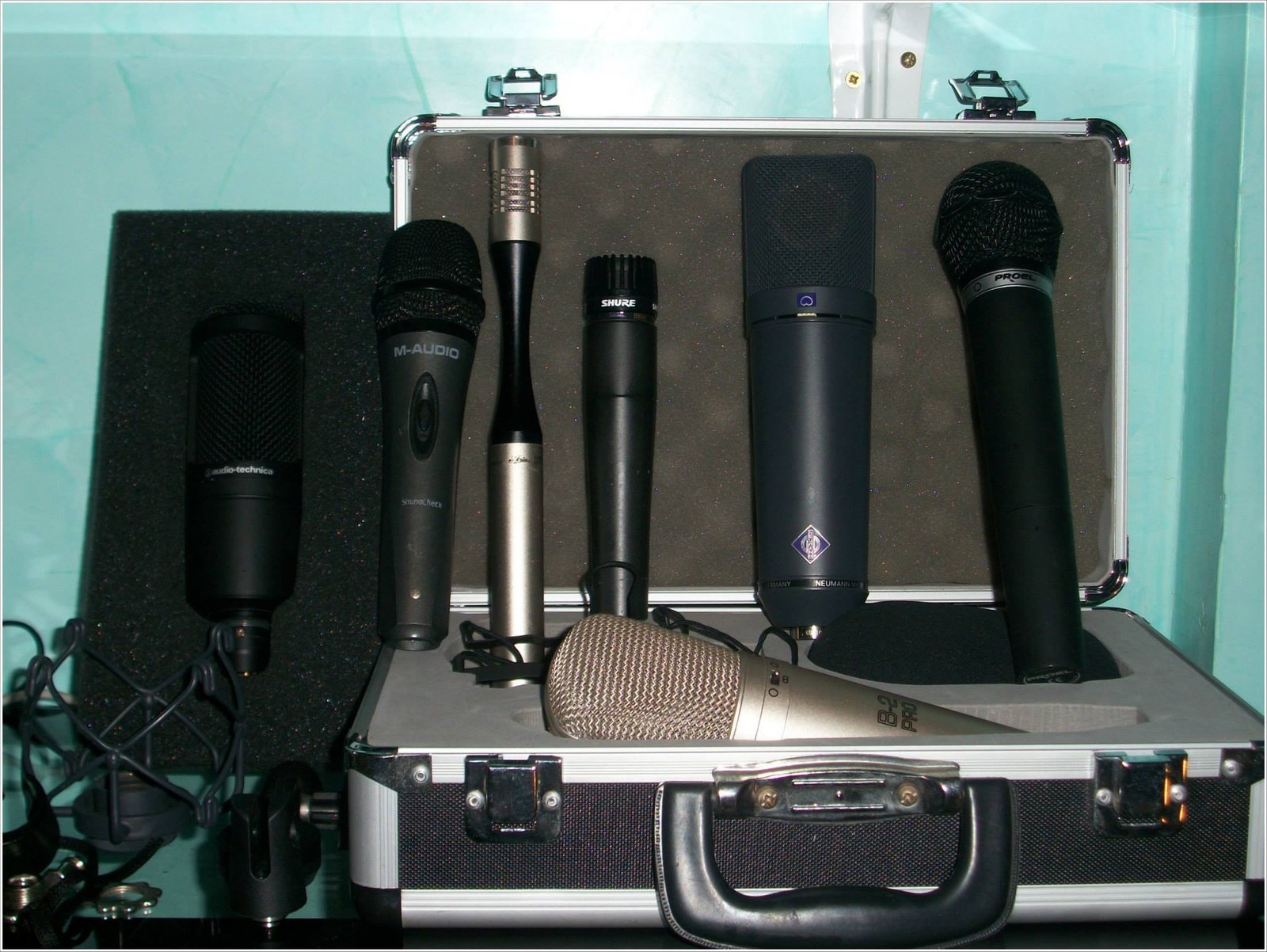
The microphone is where sound becomes captured reality. Choosing one depends on what you record and where you record it.
Condenser microphones are sensitive and detailed, making them ideal for vocals, narration, and acoustic instruments.
Dynamic microphones are more forgiving in untreated or noisy environments and handle strong voices well.
A good microphone doesn’t just capture sound — it captures character.
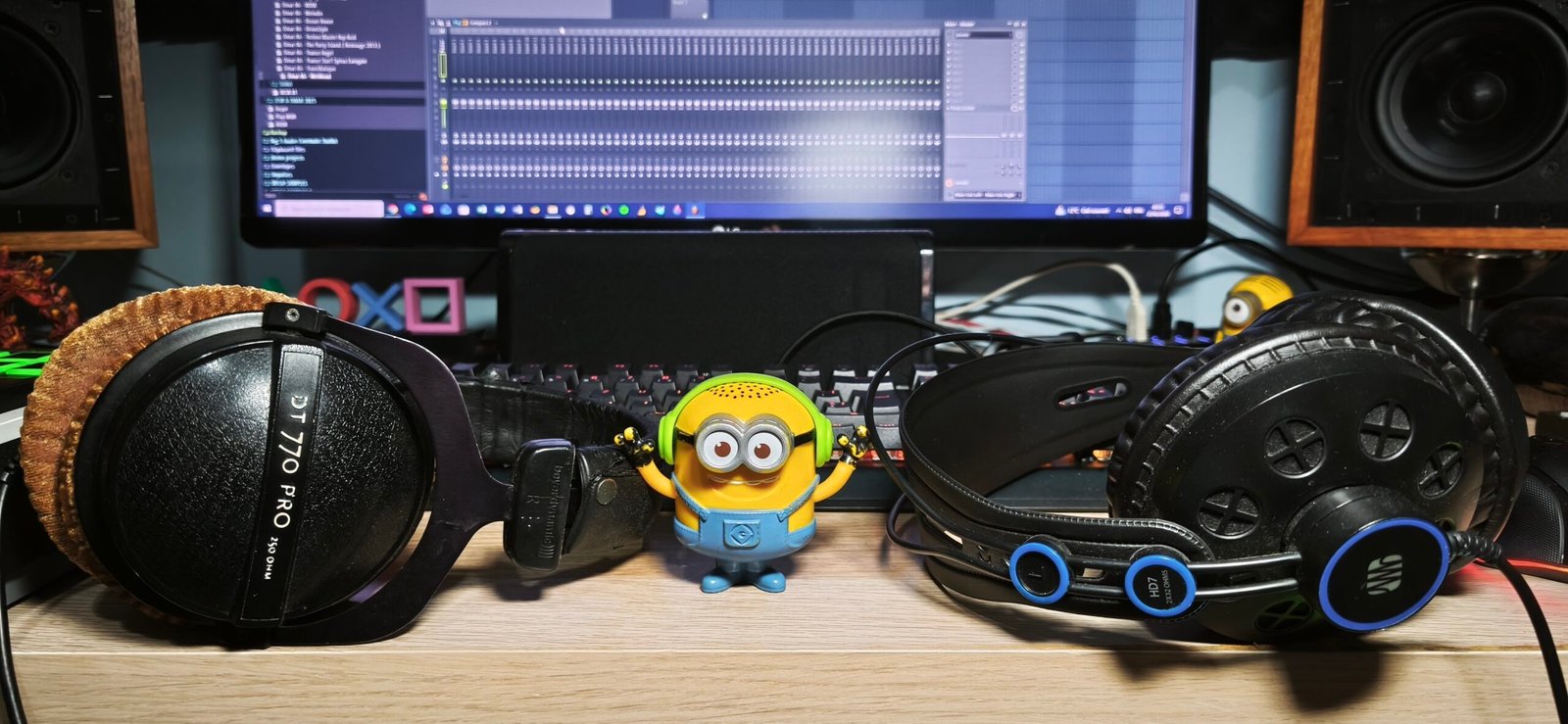
A monitoring headphone for accuracy and focus
A good pair of monitoring headphones is essential, especially in a home environment.
They allow you to record without bleed, work late without disturbing others, and hear details that might be missed through speakers.
Comfort matters just as much as sound accuracy. Long sessions demand both.
Studio monitors: hearing your work in a real space
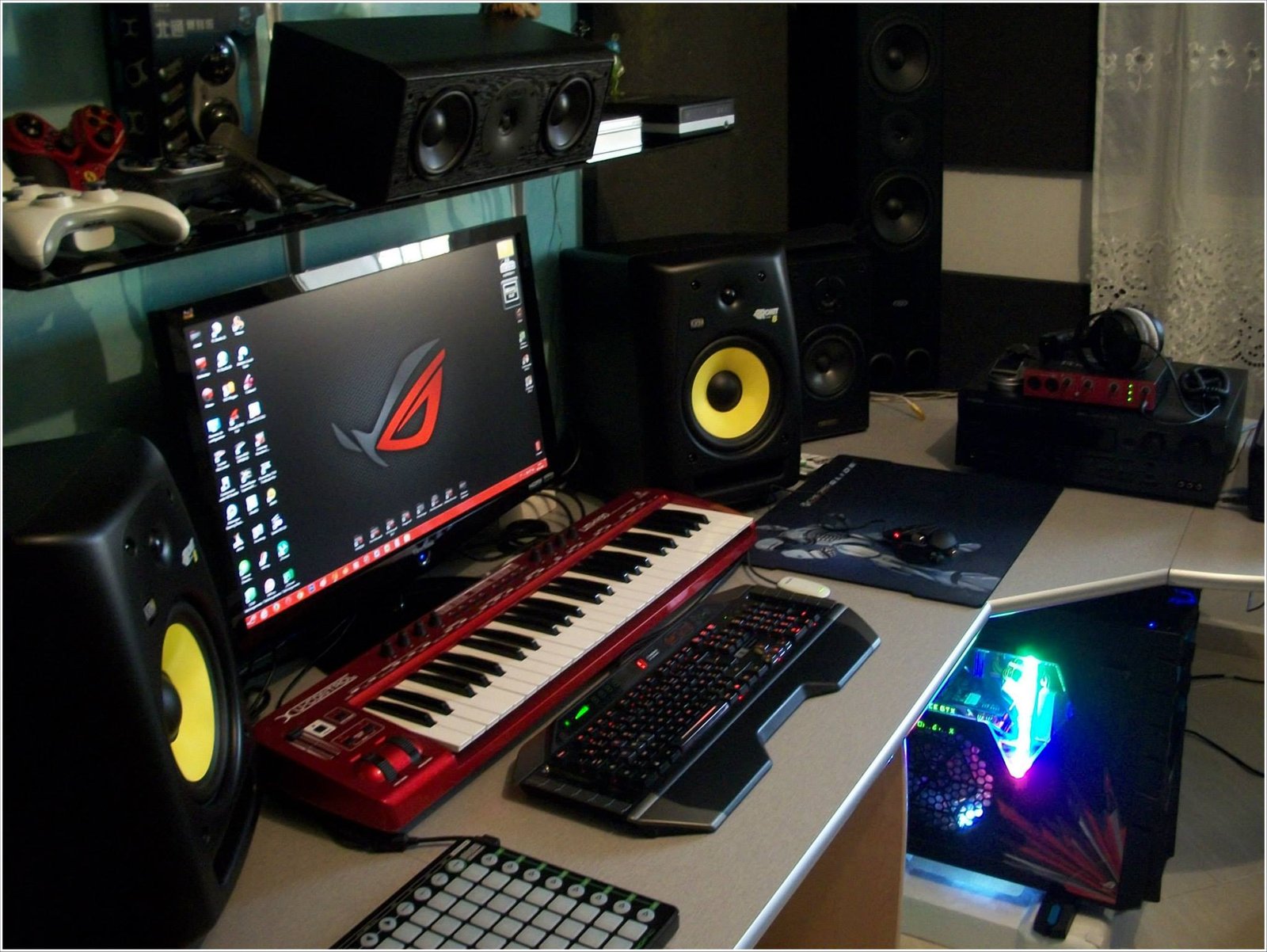
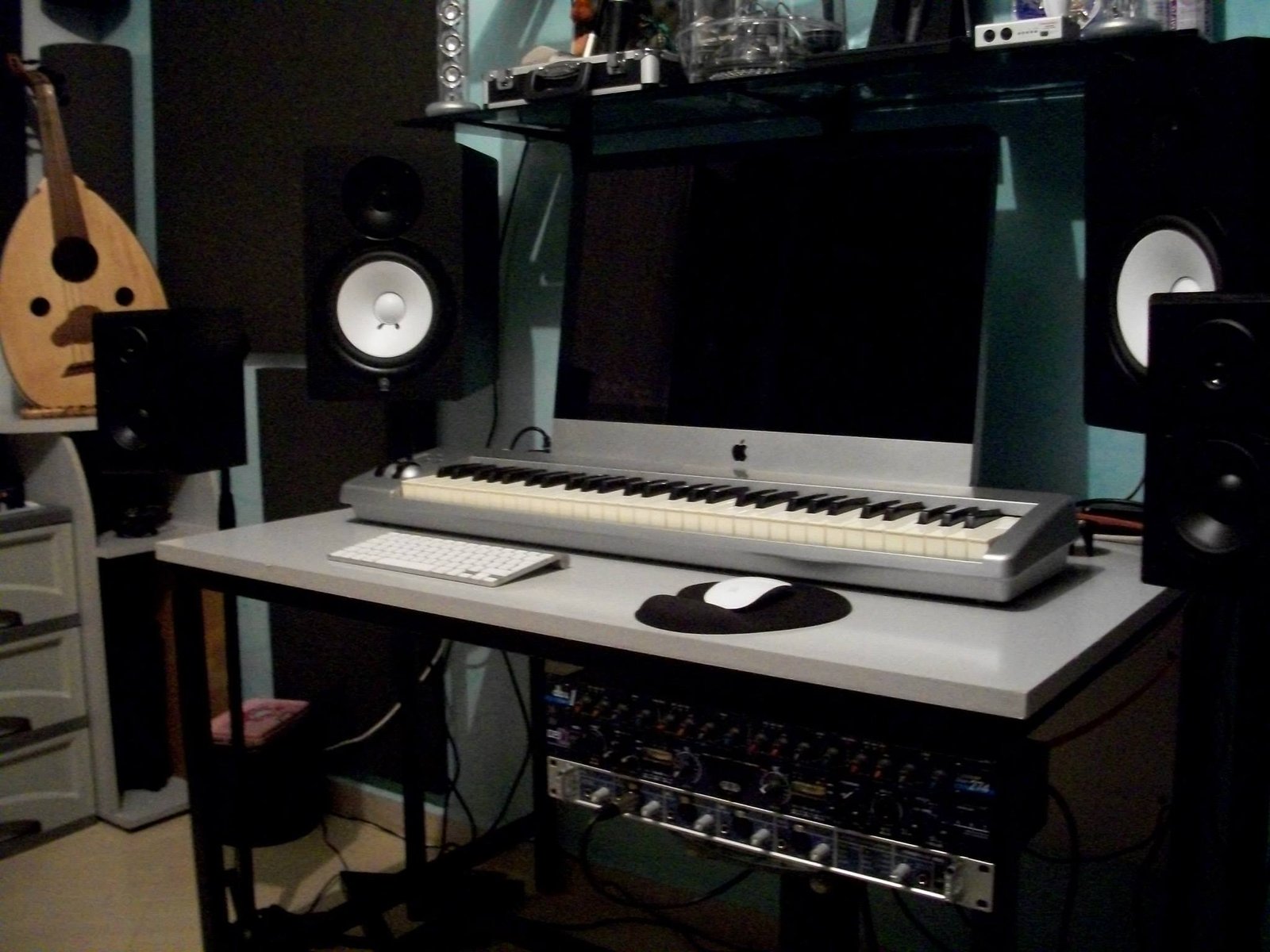
While headphones reveal detail, speakers reveal balance.
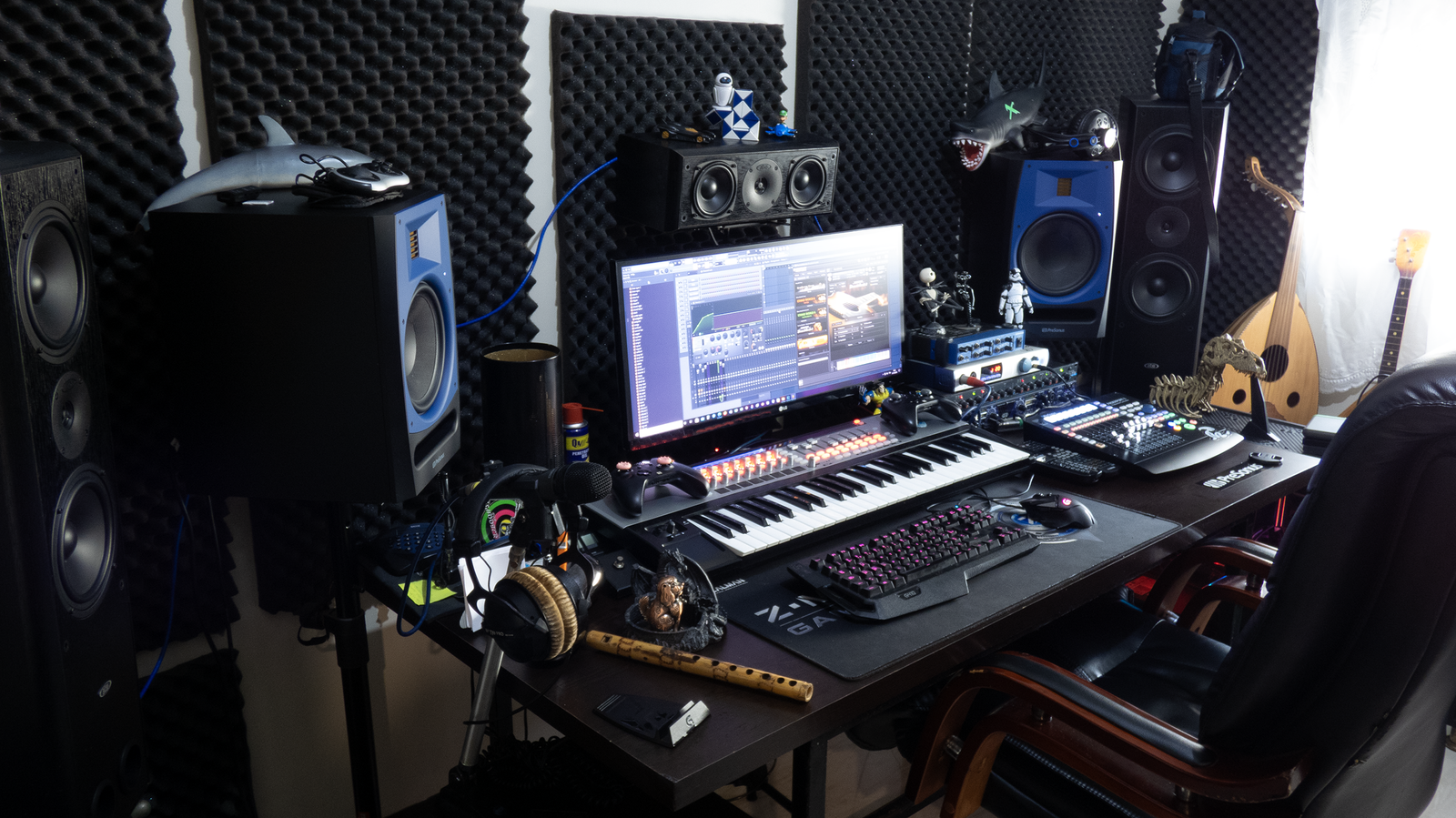
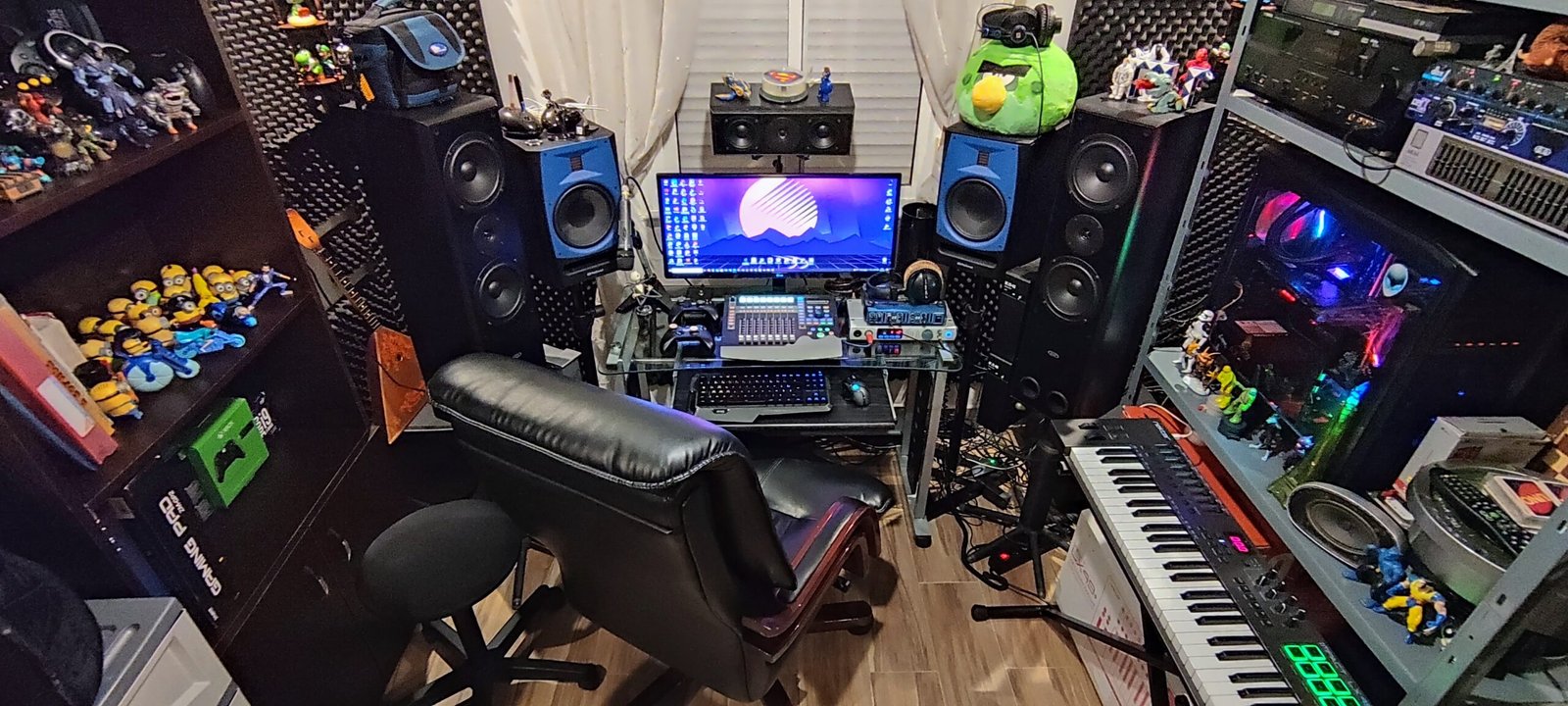
Studio monitors help you understand how sound behaves in space, how frequencies interact, and how stereo width translates beyond headphones.
Even in small rooms, compact monitors can dramatically improve decision-making.
A DAW: your creative environment
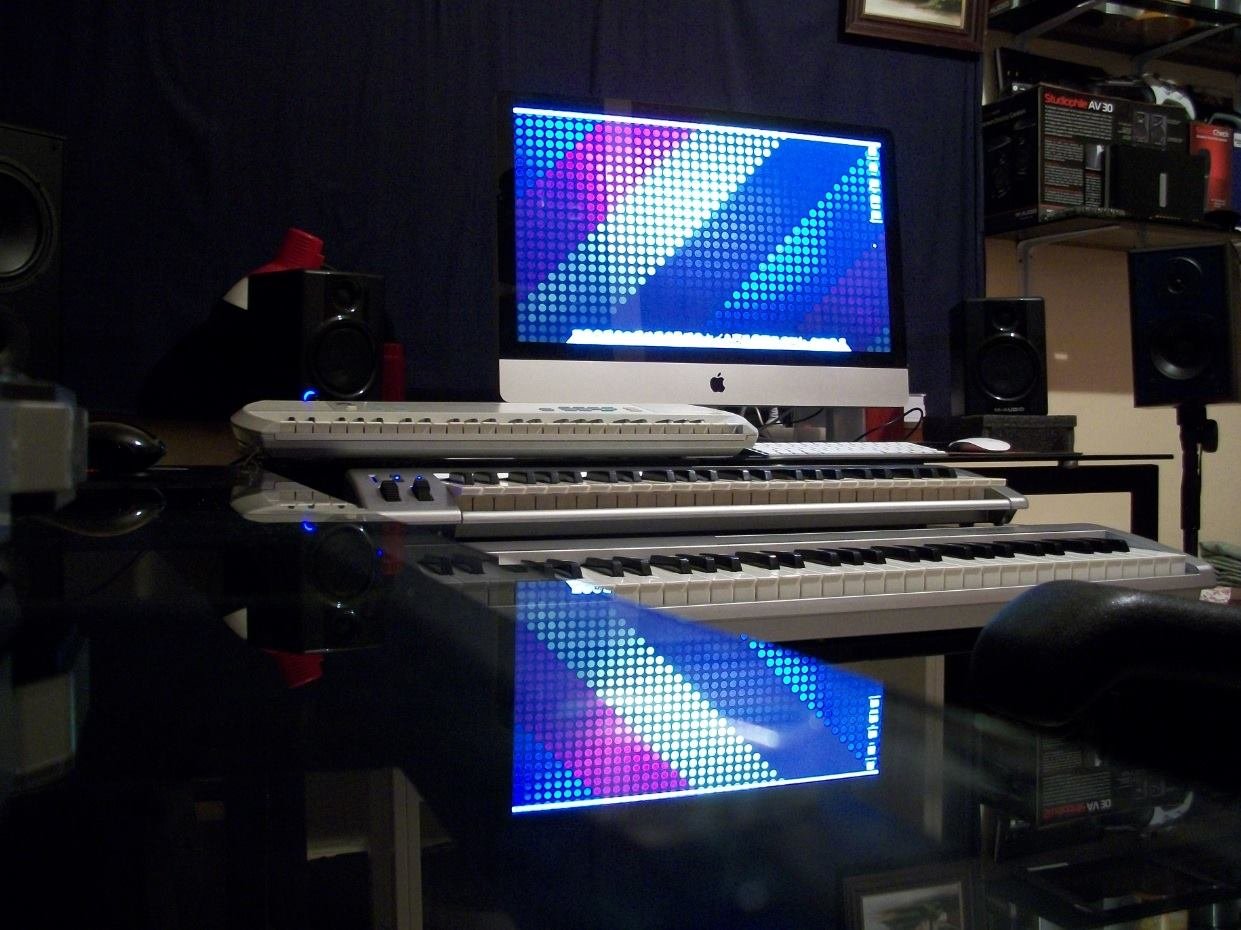
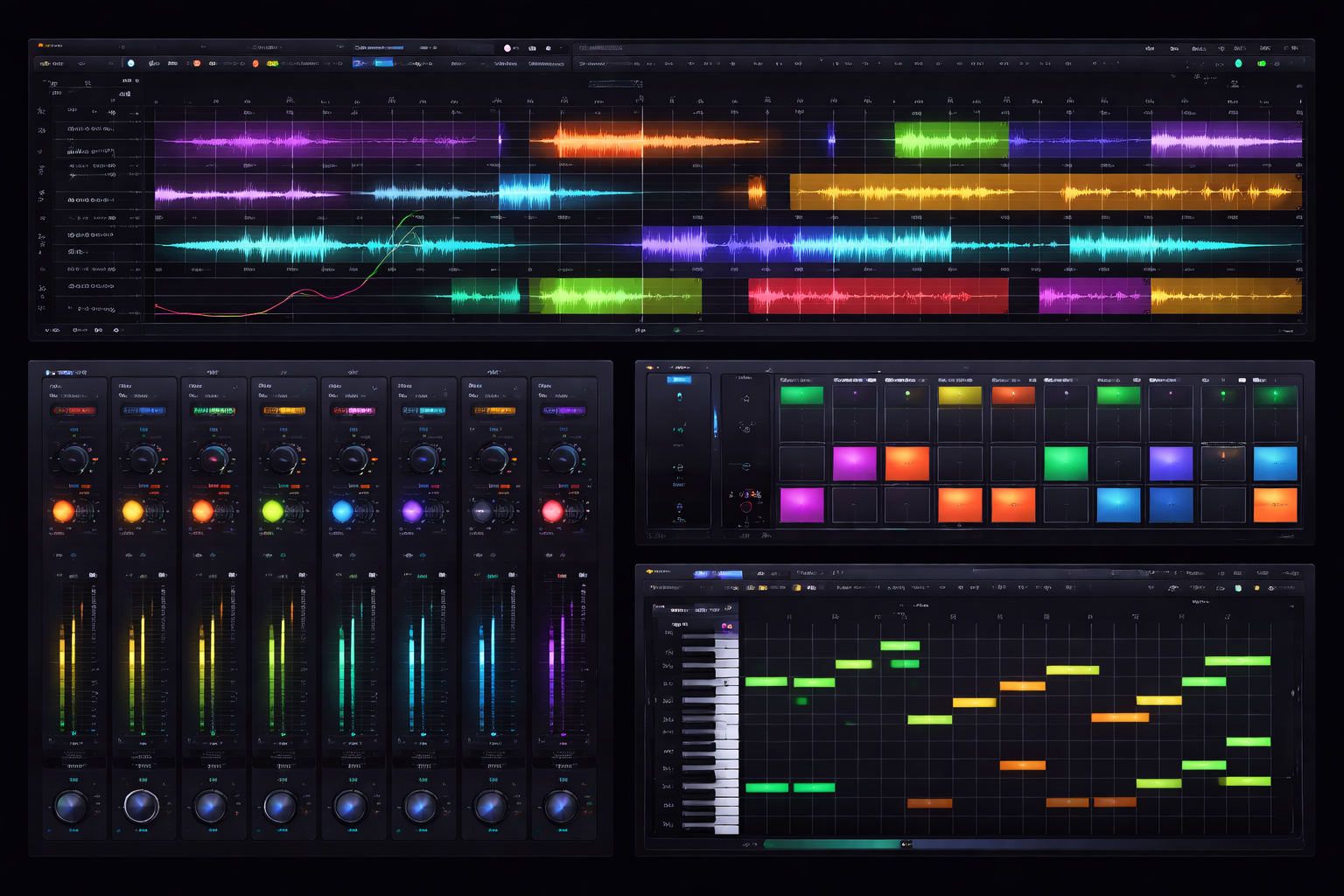
Your Digital Audio Workstation is where everything comes together — recording, editing, arranging, and mixing.
All modern DAWs are capable of professional results. The best choice is the one that feels intuitive and keeps you focused on creativity rather than menus.
Workflow matters more than brand names.
The small accessories that make a big difference
Often overlooked, simple accessories can improve both sound quality and comfort:
a stable microphone stand
a pop filter for clean vocal recordings
quality cables
a comfortable workspace
good lighting and organization
A well-organized space supports better creativity.
Don’t ignore the room you work in
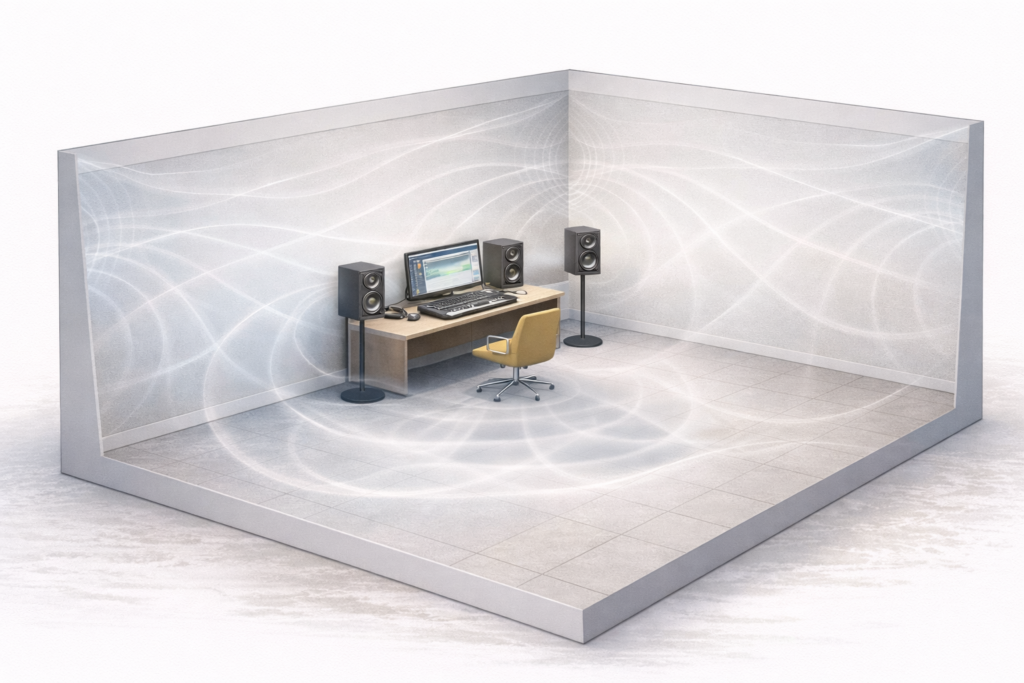
Even with great equipment, the sound you hear is shaped by the space around you.
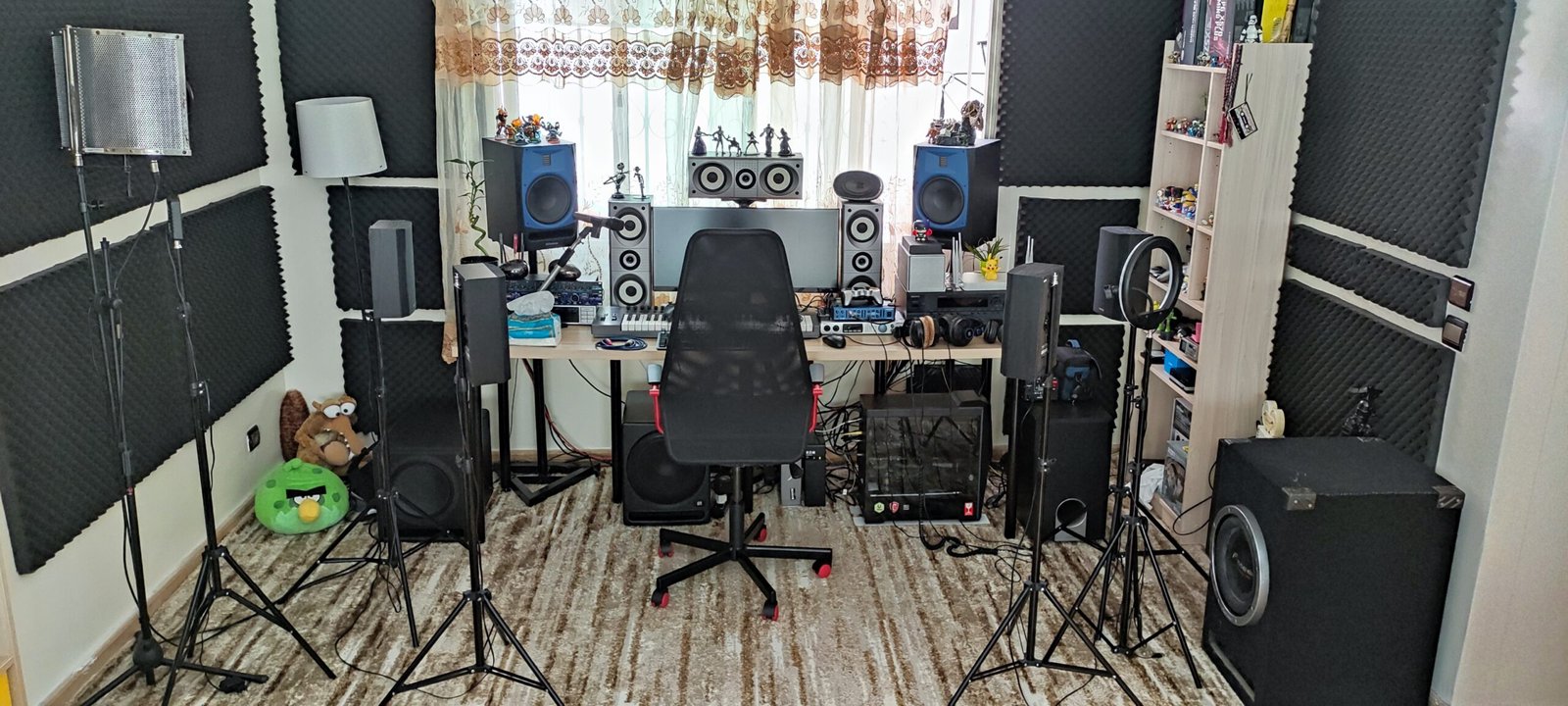
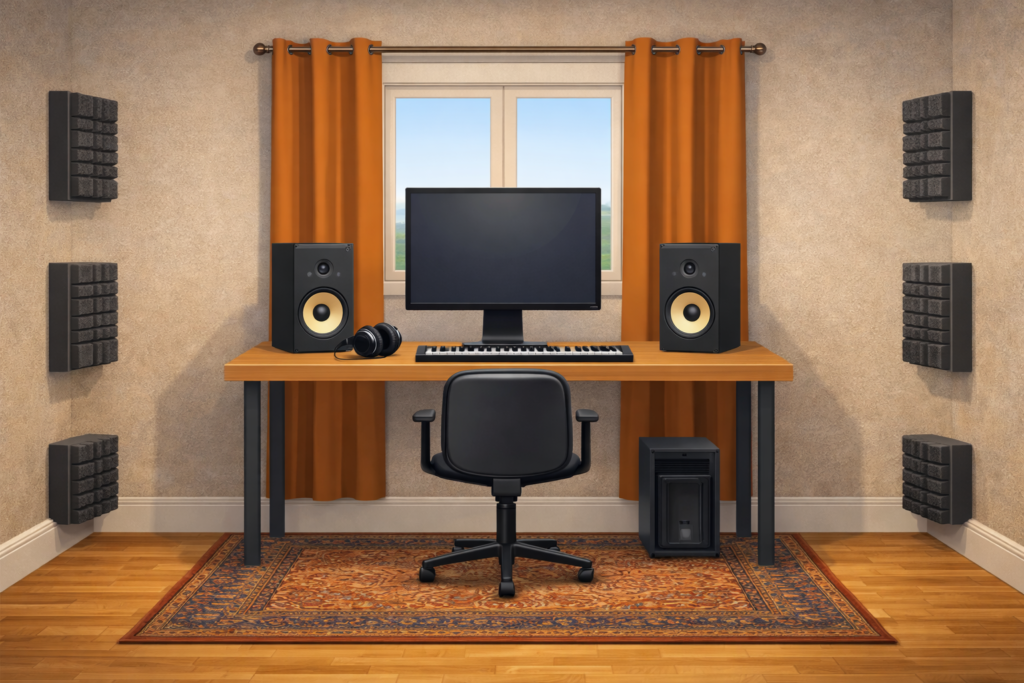
Bare walls and hard surfaces create reflections that distort clarity. Soft furnishings, rugs, curtains, and bookshelves can help control reflections and make listening more accurate.
Acoustics isn’t about perfection — it’s about reducing problems.
Build gradually, not all at once
A home studio is not built in a day.
Start with the essentials. Learn your tools. Understand your listening environment. Improve step by step as your needs grow.
Skill, experience, and critical listening will always matter more than the quantity of gear.
Final thoughts
At its core, a home studio is not defined by equipment — it is defined by intention.
With a reliable computer, a clean audio path, and an accurate listening setup, you already have the foundation to create meaningful work.
Everything else is refinement.
Because in the end, what matters most is not the gear you own — but what you learn to hear.