
Before exploring advanced audio concepts such as spectral analysis, frequency visualization, or sound design techniques, it is essential to understand the basic nature of sound.
Many people interested in audio — whether musicians, engineers, or curious learners — feel overwhelmed when acoustic principles are explained in overly technical terms. Yet the foundations are simple. They are often assumed to be obvious by specialists, but revisiting them makes everything else clearer.
Understanding sound at its core helps us better understand recording, mixing, room acoustics, and how we perceive music.
Sound as vibration in motion
Sound is a mechanical vibration that travels through a medium such as air.
When an object vibrates — a guitar string, a loudspeaker cone, or vocal cords — it causes nearby air molecules to move. These molecules push and pull against each other, transmitting energy outward.
A useful analogy is the ripple created when a stone is dropped into water. The water itself does not travel across the surface; instead, energy moves outward in waves. Sound behaves in a similar way in air.
Without a medium such as air, sound cannot propagate. This is why sound cannot travel in a vacuum.
Sound waves and their shape
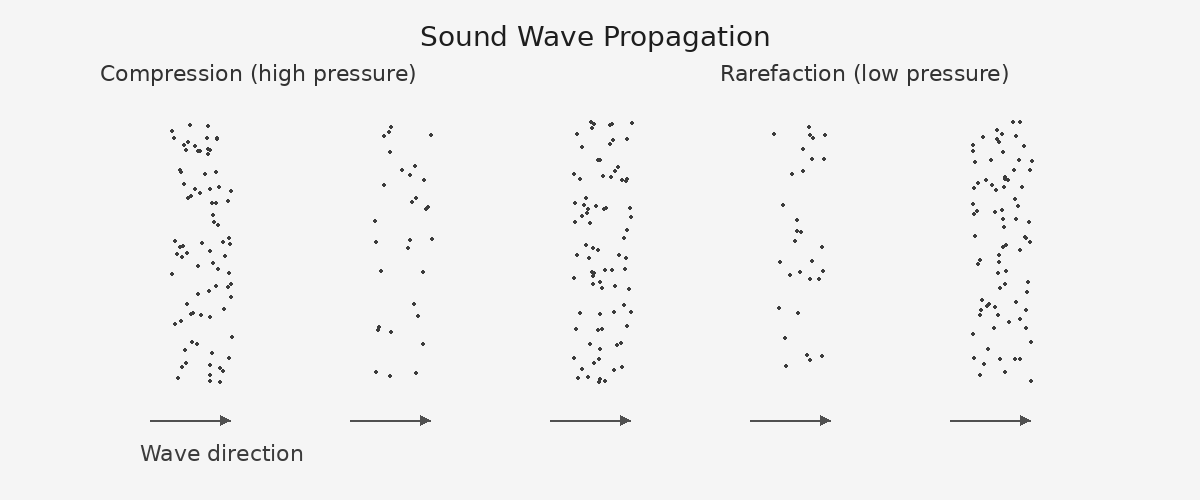
As sound travels, it creates alternating regions of compression and rarefaction in the air. These pressure variations form what is known as a sound wave.
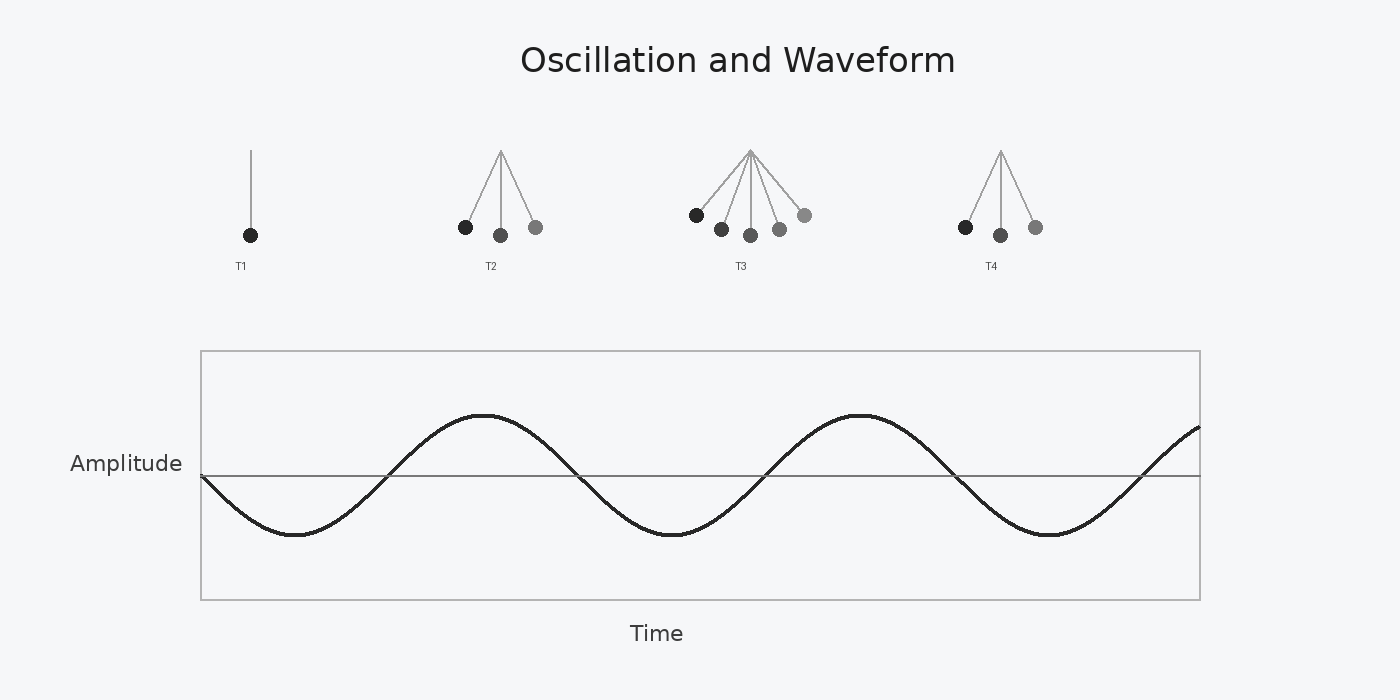
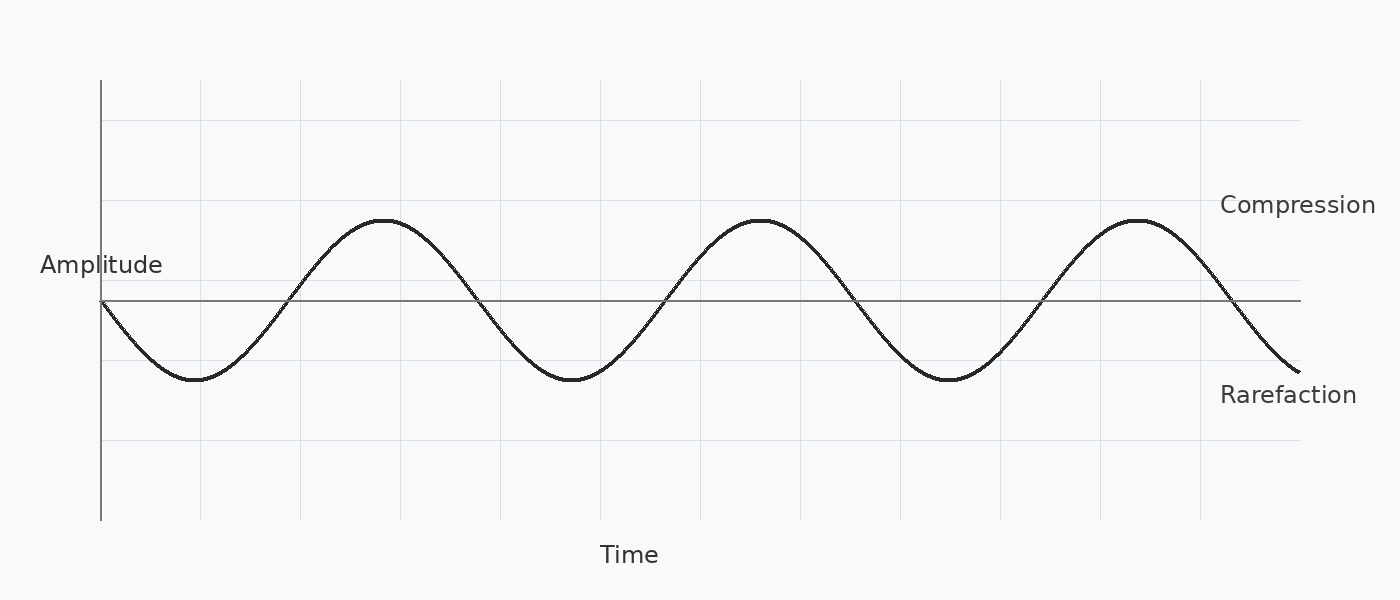
This motion is often represented as a sinusoidal curve. While the curve is a visual representation, it helps illustrate how the wave oscillates over time.
If you imagine a pendulum swinging back and forth while drawing its motion on a moving sheet of paper, you would produce a similar wave pattern. This visualization helps us understand how sound oscillates in a repeating cycle.
Frequency: how fast sound vibrates
One of the most important properties of sound is frequency.
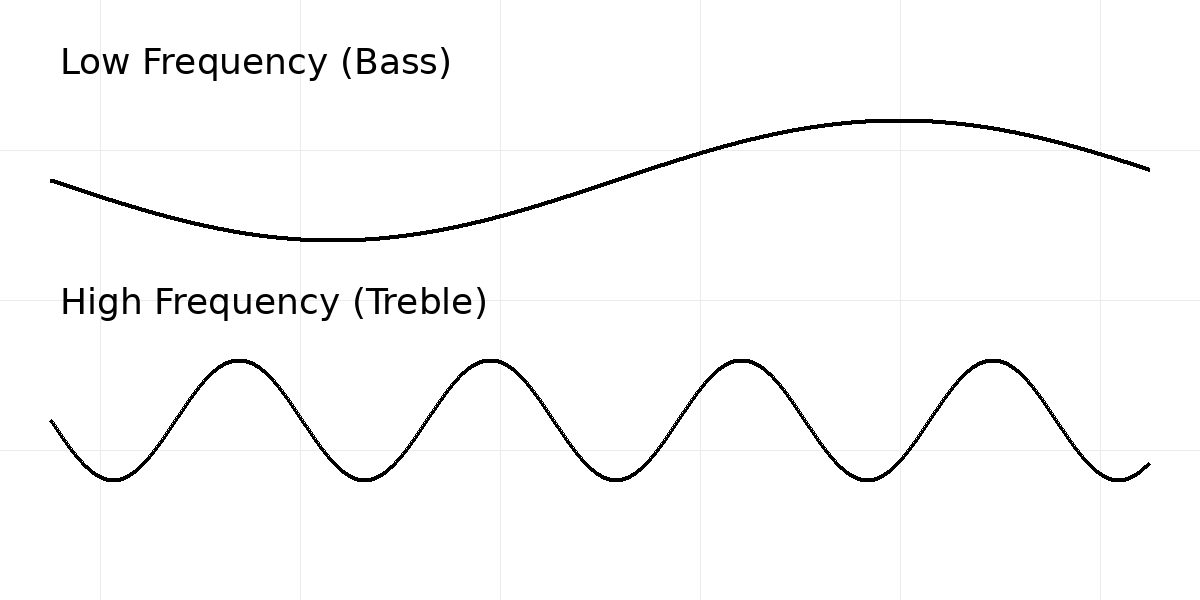
Frequency describes how many times a vibration cycle repeats in one second. It is measured in Hertz (Hz).
Low frequencies vibrate slowly and are perceived as bass.
High frequencies vibrate rapidly and are perceived as treble.
These cycles are measured in Hertz (Hz). The human voice is on average between 100 and 400 vibrations per second (between 100 and 400 Hz) with frequency peaks that can reach 5000 Hz (5 kHz) for opera singers (sopranos).
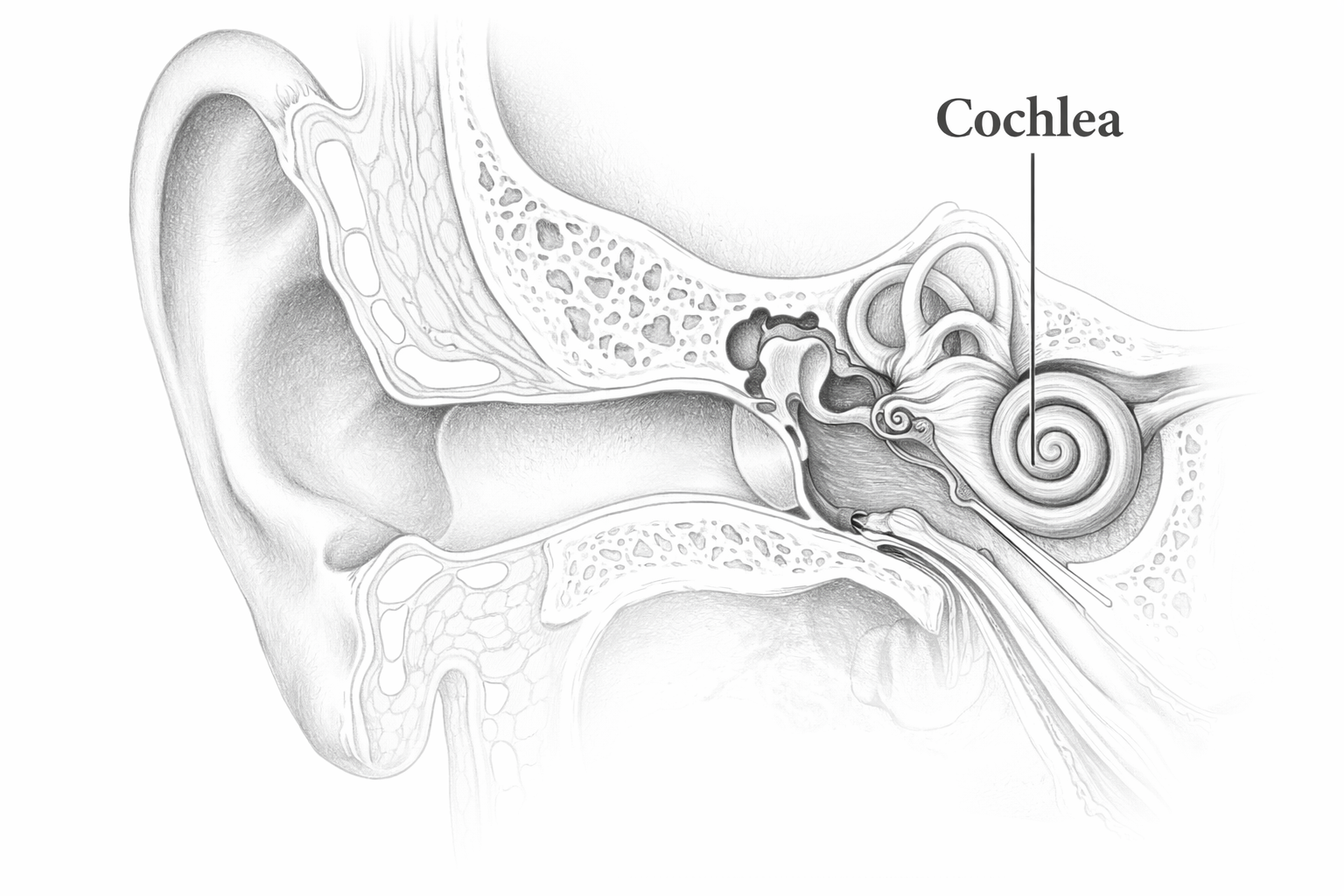
The average human hearing range spans from approximately 20 Hz to 20,000 Hz (20 kHz). Frequencies above this range are known as ultrasound. Some animals, such as bats, use ultrasonic frequencies far beyond human hearing for echolocation.
Our auditory system (mainly the eardrum and cochlea) allows us to perceive vibrations ranging from 20 Hz to 20,000 Hz (or 20 kHz):
Amplitude: the energy of sound
Another fundamental property of sound is amplitude.
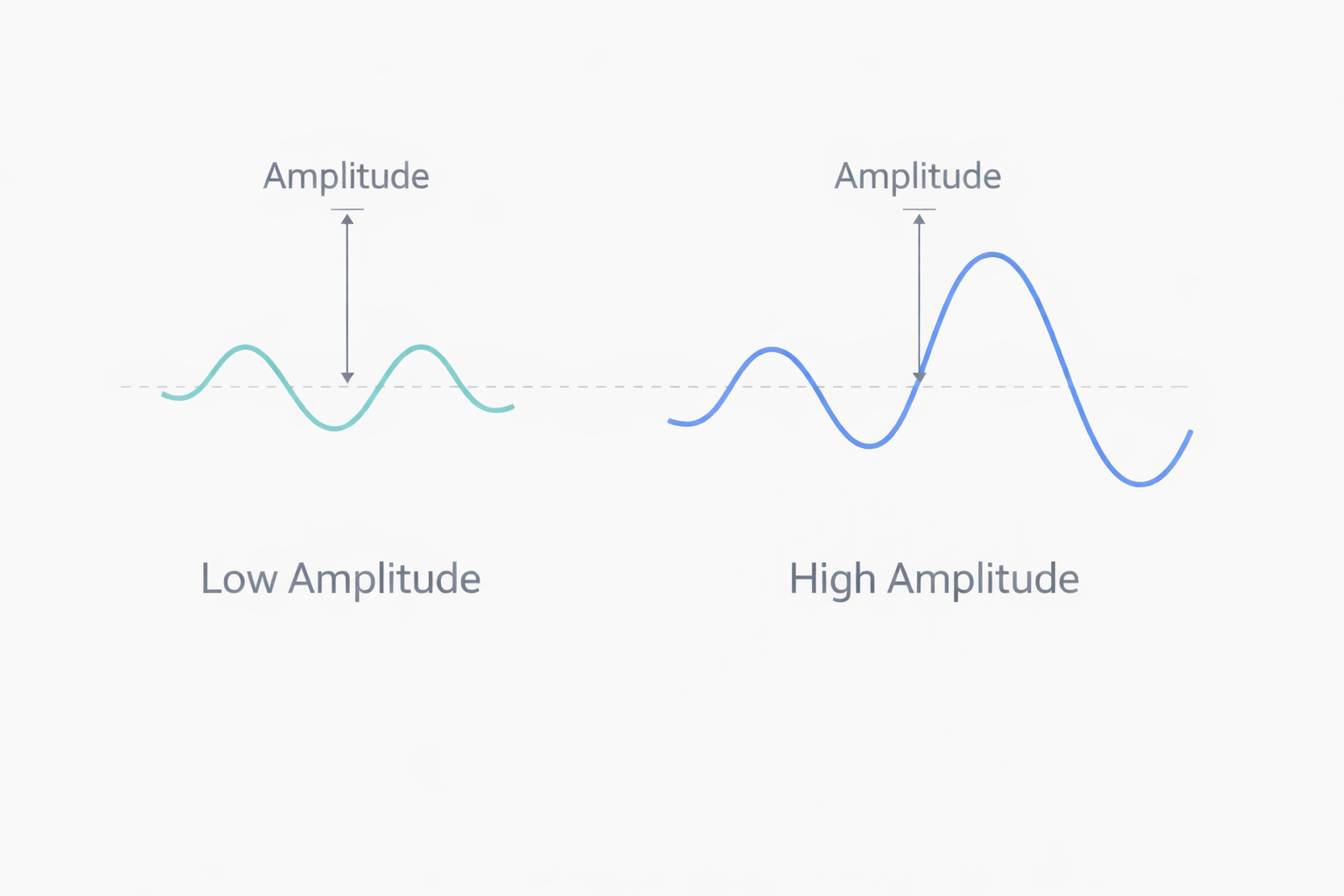
Amplitude represents the energy or strength of a sound wave. It is commonly perceived as loudness and is measured in decibels (dB).
In a wave representation, amplitude corresponds to the height of the waveform. Greater amplitude means more energy and a louder sound.
Pure tones, harmonics, and complex sounds
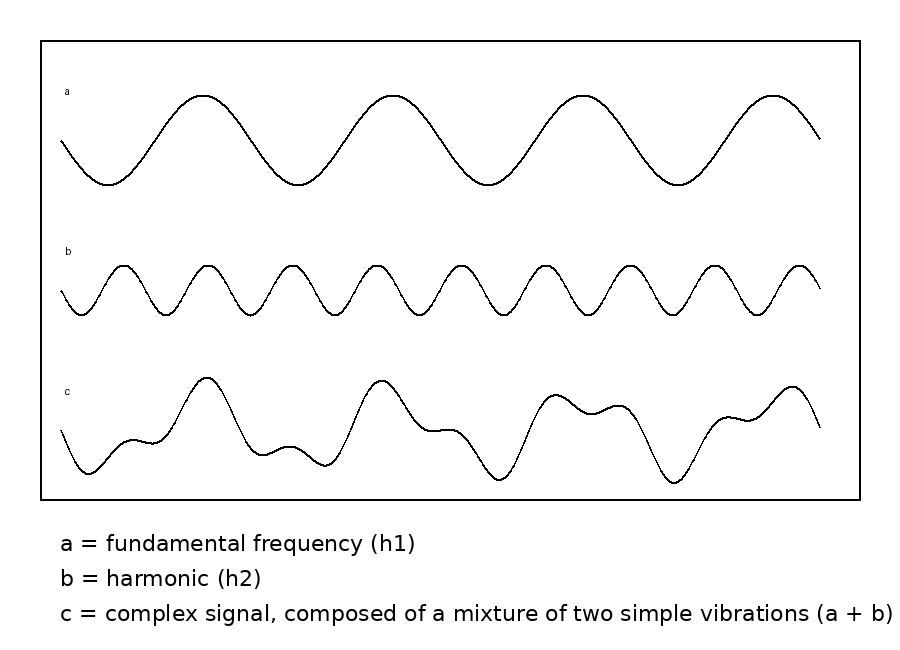
A single, simple vibration produces a pure tone known as a fundamental frequency. However, most natural sounds are far more complex.
Real-world sounds are composed of multiple vibrations occurring simultaneously. These additional frequencies, called overtones or harmonics, shape the tonal character of a sound.
This harmonic structure is what allows us to distinguish between two instruments playing the same musical note. The pitch may be identical, but the distribution of harmonics gives each sound its unique timbre.
Why Understanding Sound Matters
The fundamental principles of acoustics describe how sound is generated, transmitted, and perceived within a physical space. They explain how vibrations propagate through air, how pressure variations form sound waves, and how frequency and amplitude shape what we hear.
These principles govern:
- how sound waves travel through a medium
- how reflections and absorption affect clarity
- how frequency influences spatial behavior
- how amplitude relates to sound energy
- how the human ear perceives pressure variations
Understanding these behaviors allows us to interpret acoustic environments more accurately and to recognize how sound interacts with space and matter.
In acoustics, sound is not an abstract phenomenon — it is a physical process governed by measurable laws.