
Introduction
hese differences helps achieve morIntroduction
Sound is everywhere around us. A voice, a musical instrument, the wind, or even the atmosphere of a room creates vibrations in the air. The purpose of a microphone is to capture these vibrations and convert them into an electrical signal that can be recorded, amplified, or broadcast.
Even though all microphones share the same goal, they do not react in the same way. Some microphones are designed to capture vocals with precision, while others are better suited for recording room ambience or distant sounds used in cinema and documentaries.

Frequency Response
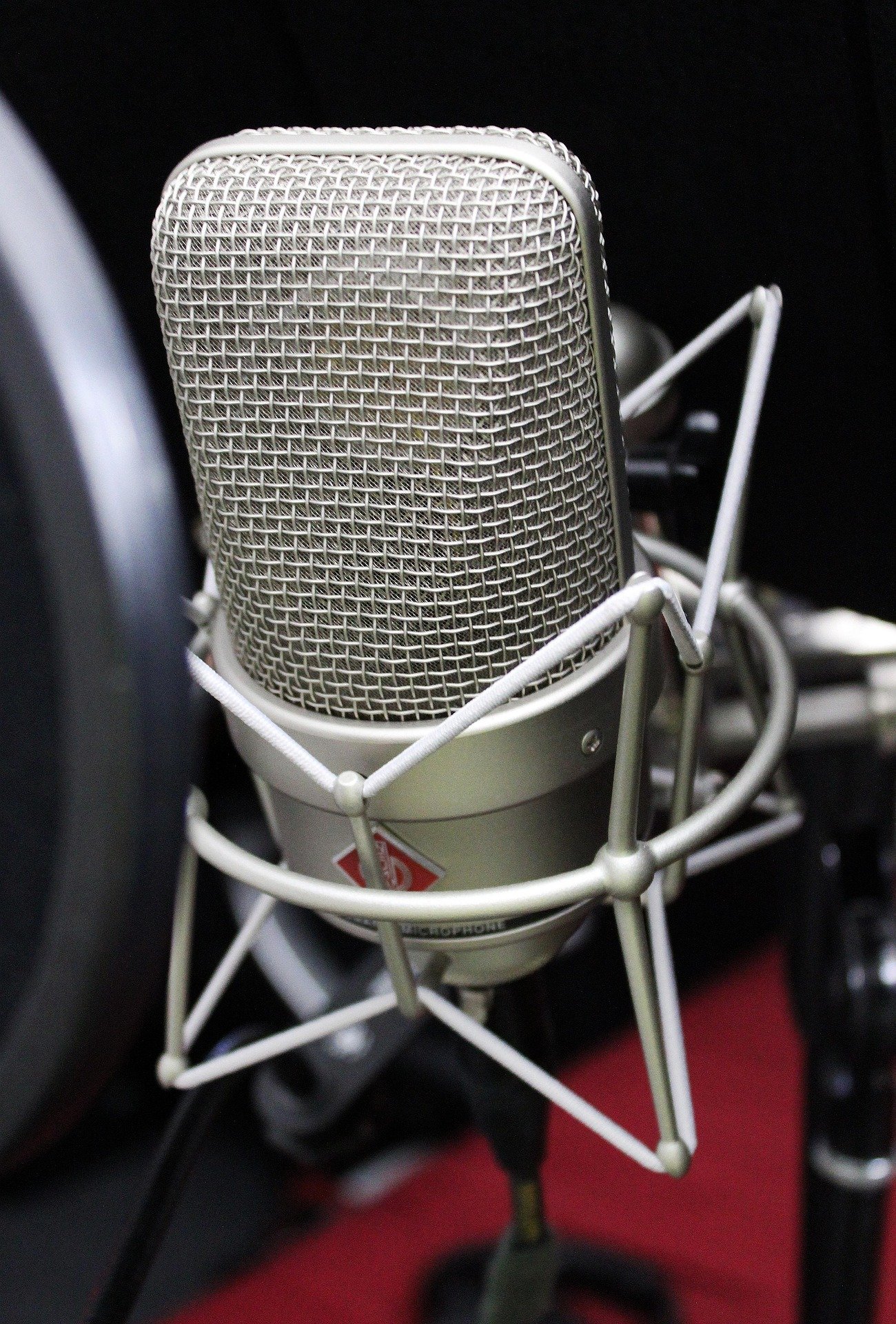
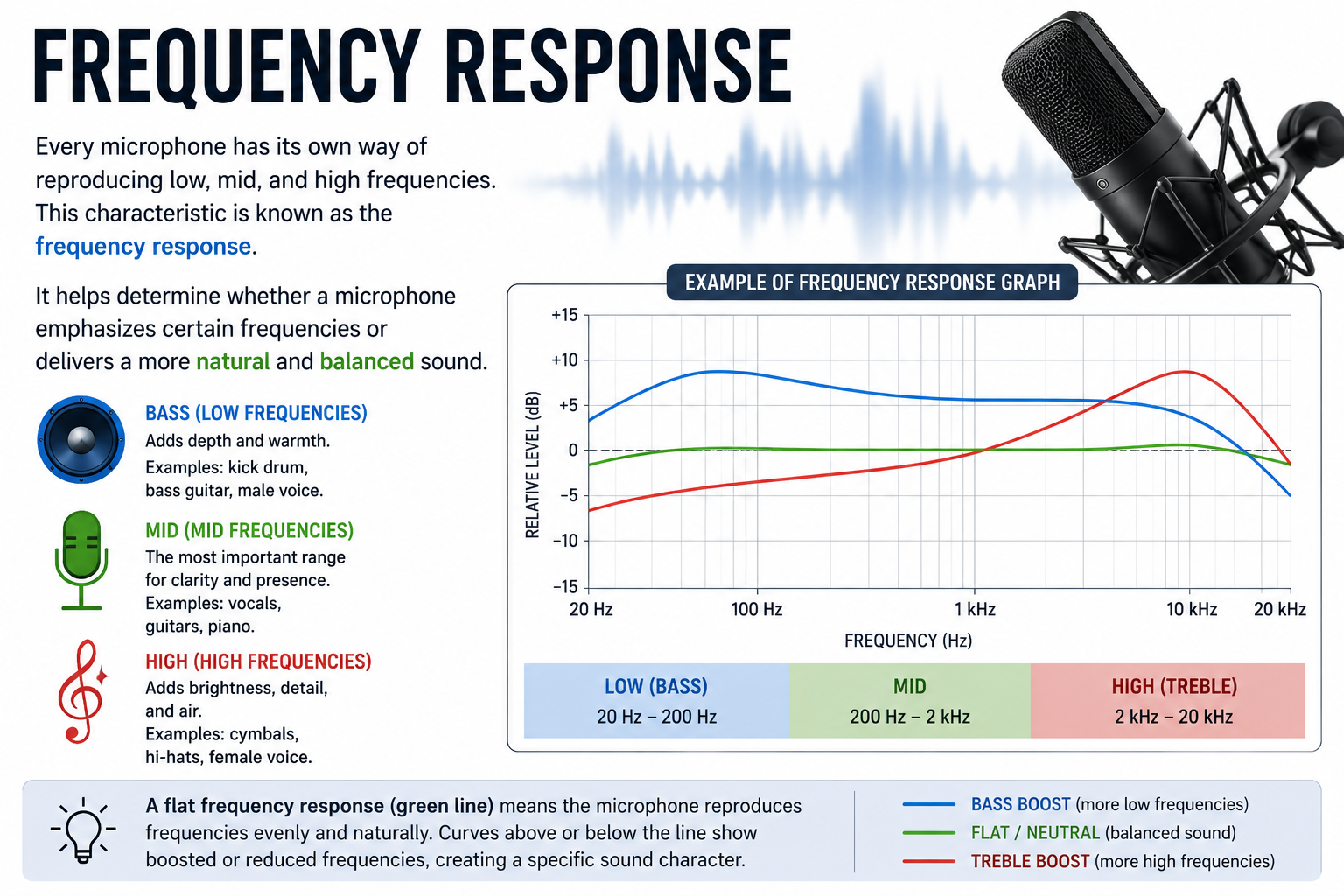
Every microphone has its own way of reproducing low, mid, and high frequencies. This characteristic is known as the frequency response. It helps determine whether a microphone emphasizes certain frequencies or delivers a more natural and balanced sound.
Frequency Range
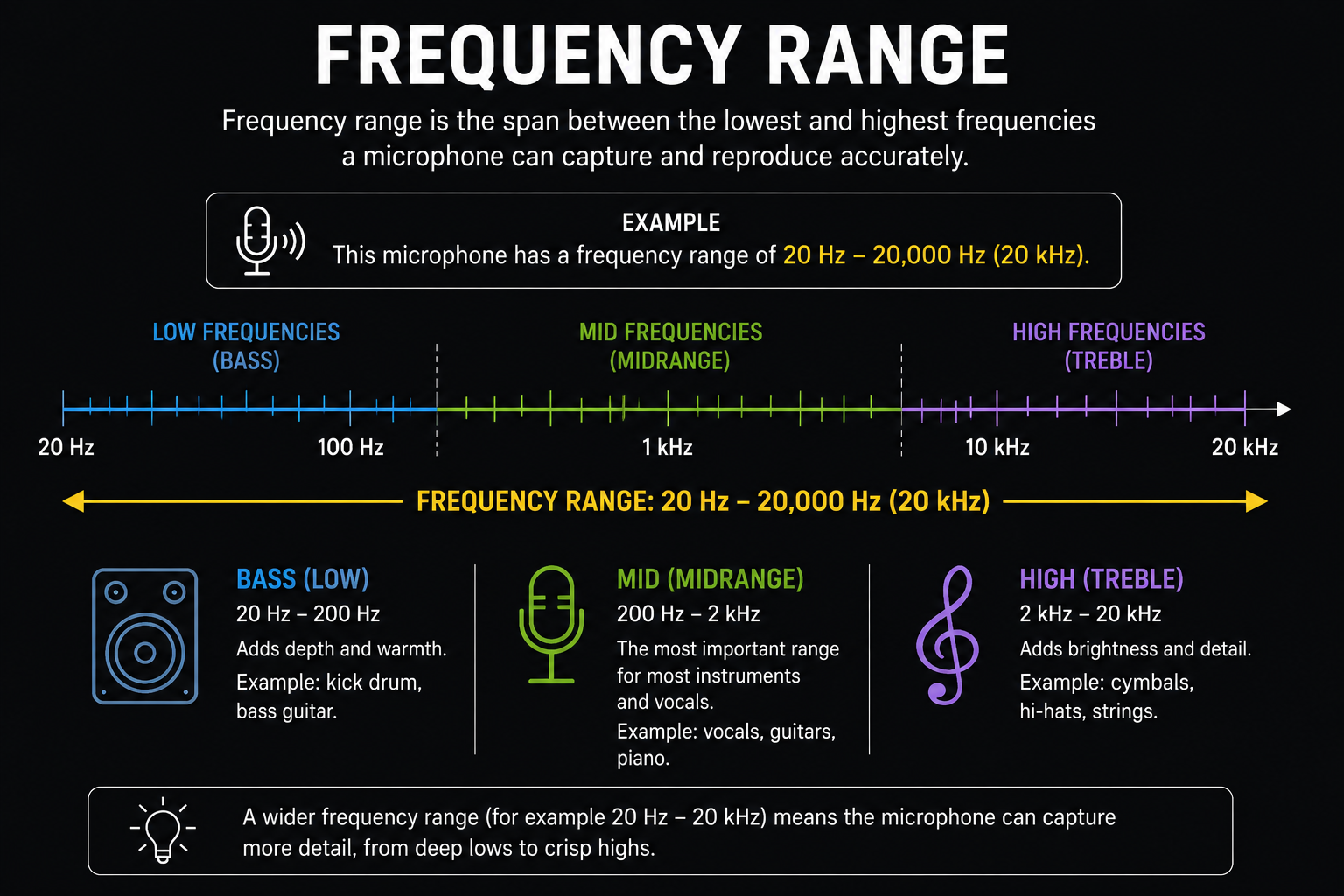
The frequency range represents the spectrum of frequencies that a microphone can reproduce correctly. The wider the range, the more detailed and accurate the sound reproduction becomes.
Polar Pattern
The polar pattern describes how a microphone captures sound around it. Some microphones pick up sound from every direction, while others focus only on a specific area.
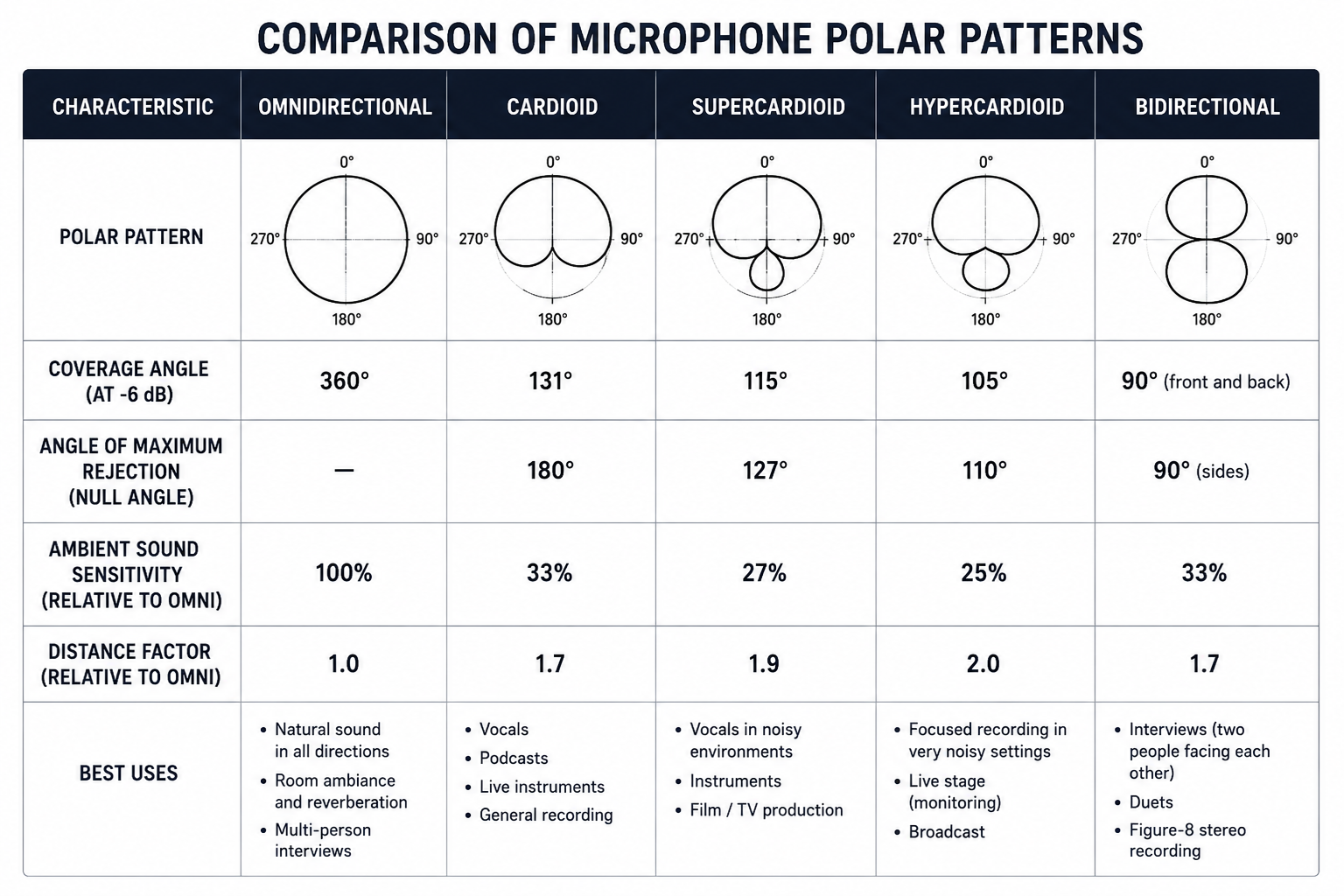
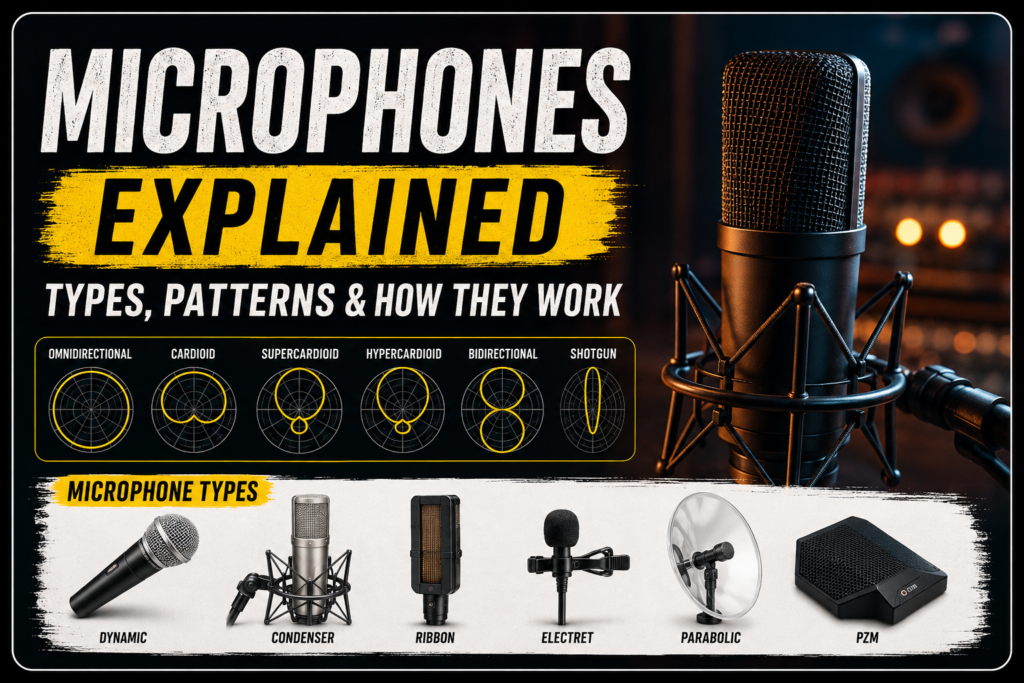
Different Types of Polar Patterns
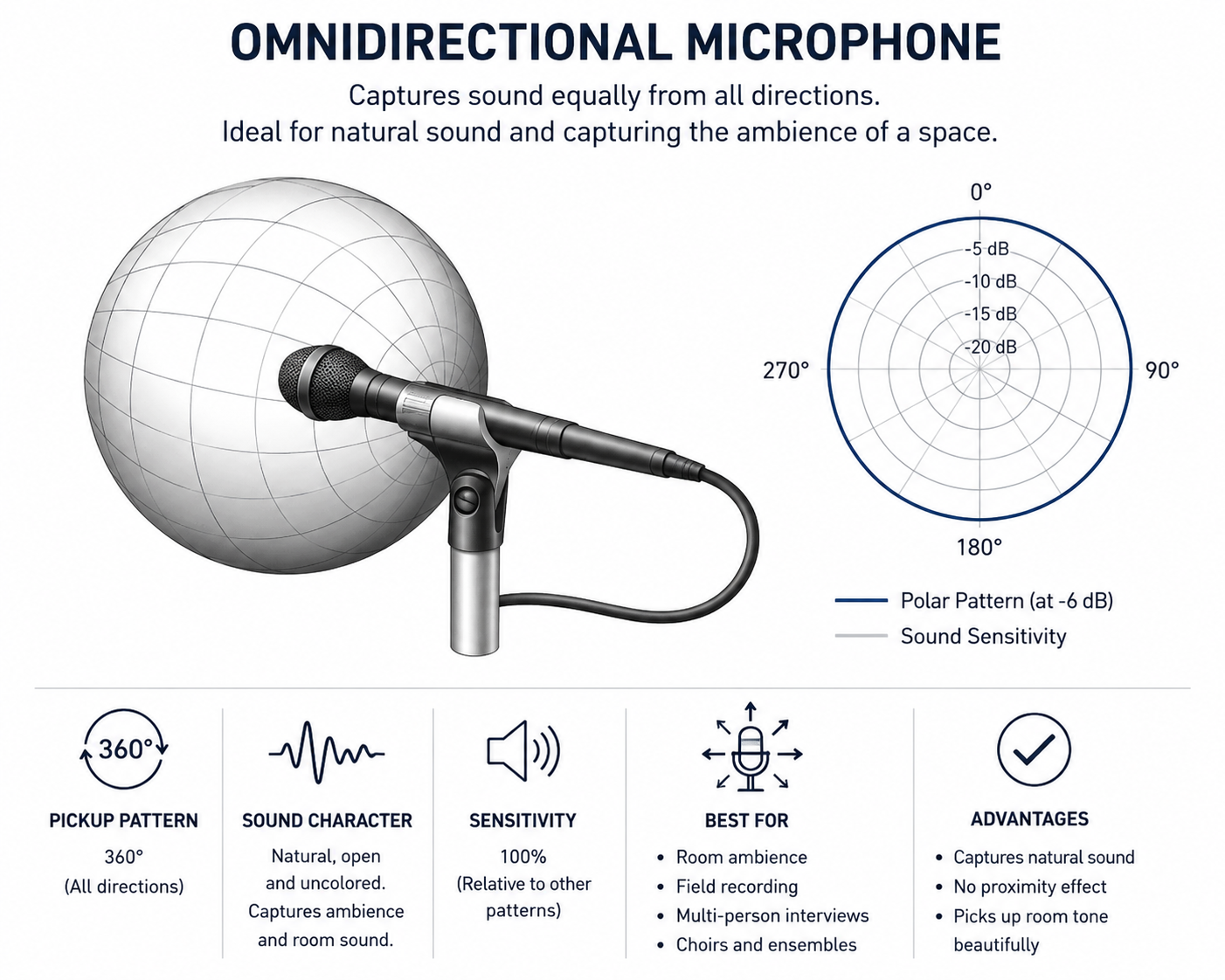
Omnidirectional Microphone
An omnidirectional microphone captures sound equally from all directions. It is commonly used when recording the natural ambience of a room or several people around the microphone.
It is appreciated for its natural and transparent sound reproduction and for the absence of proximity effect. However, it can also capture unwanted background noises such as fans, air conditioning, or room reflections.
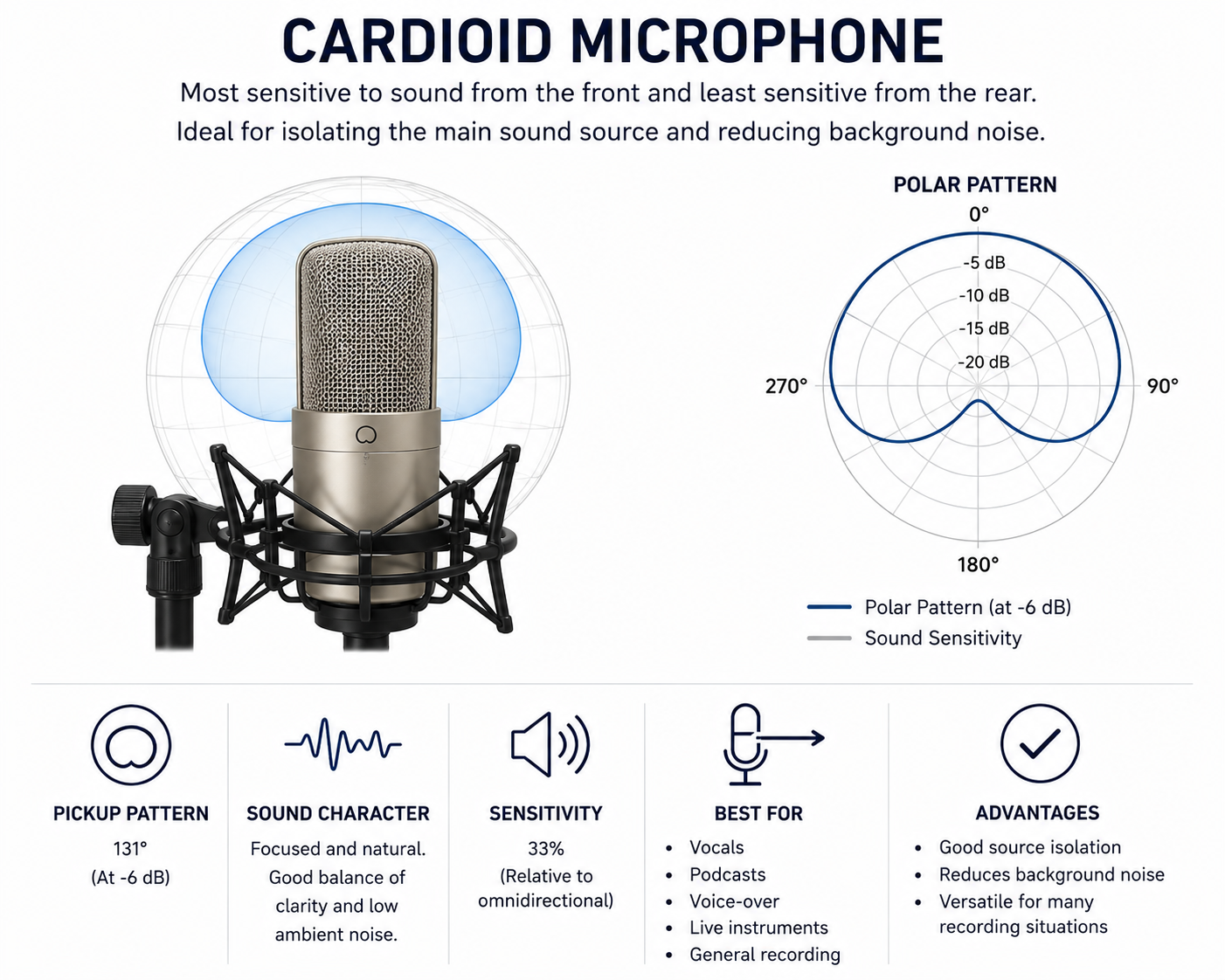
Cardioid Microphone
A cardioid microphone mainly captures sound coming from the front while reducing sounds coming from the rear.
It is one of the most widely used microphones in studios and live performances because it helps isolate vocals or instruments while minimizing ambient noise and feedback issues.
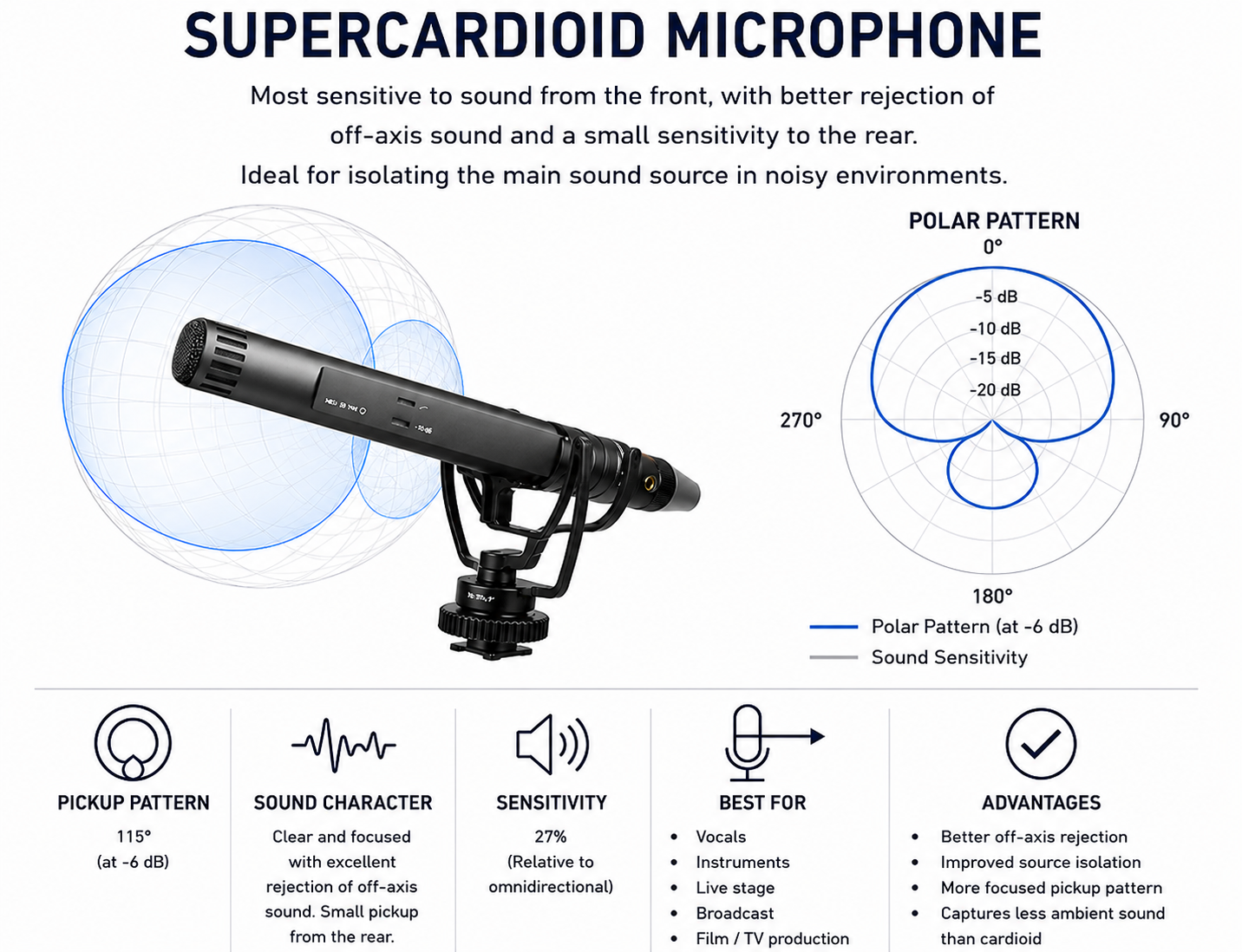
Supercardioid Microphone
The supercardioid microphone is even more directional than a standard cardioid microphone. It is designed for noisy environments where focusing on a single sound source is essential.
It is commonly used in concerts, broadcasting, and sports events.
Hypercardioid Microphone
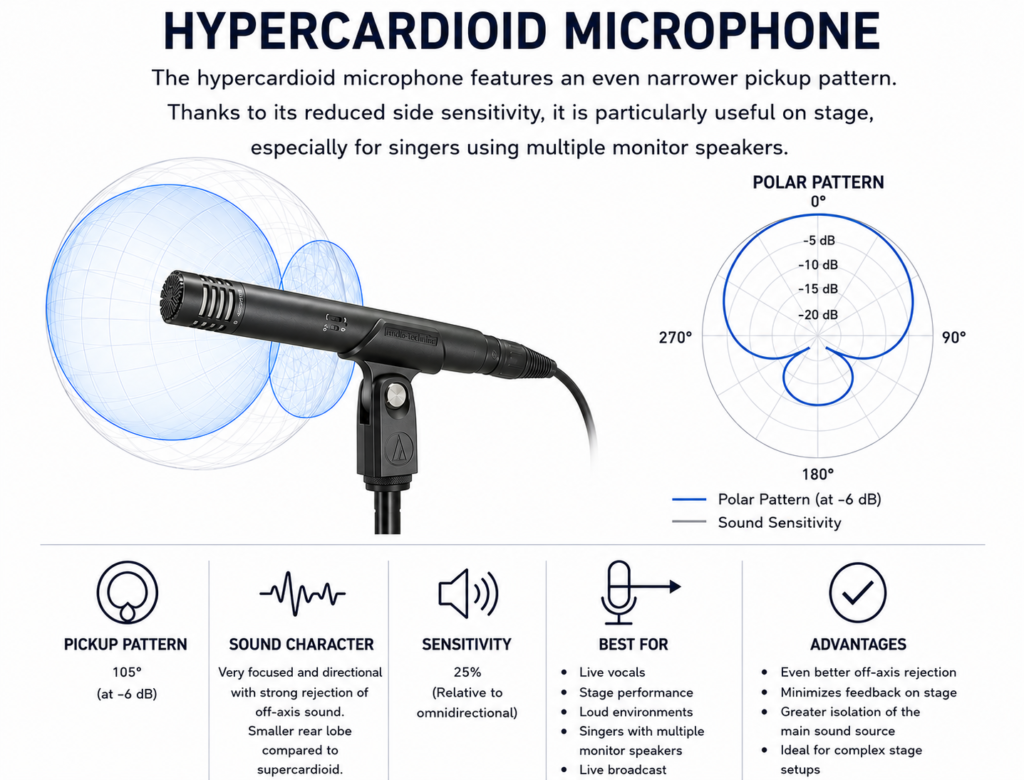
The hypercardioid microphone features an even narrower pickup pattern. Thanks to its reduced side sensitivity, it is particularly useful on stage, especially for singers using multiple monitor speakers.
Bidirectional Microphone
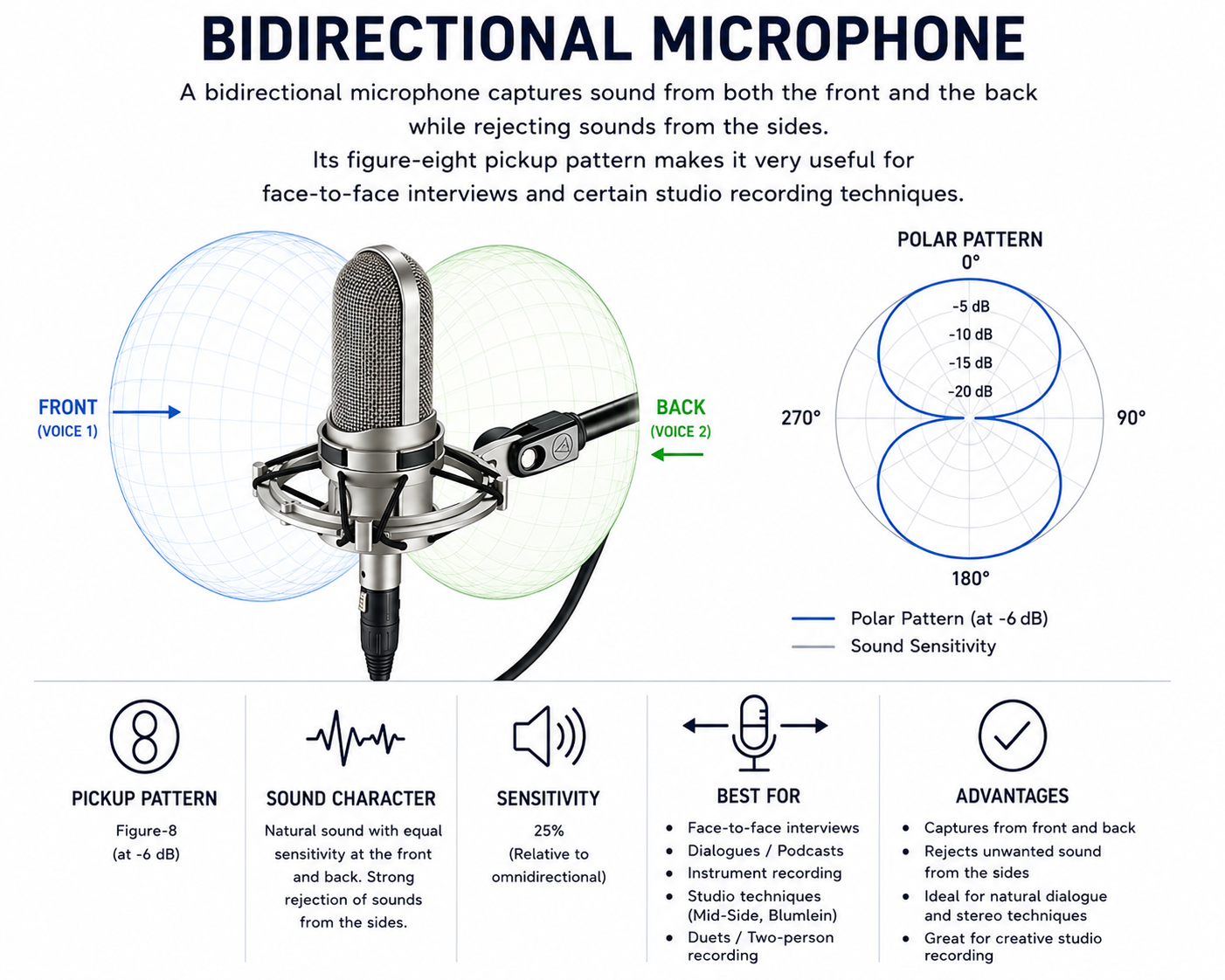
A bidirectional microphone captures sound from both the front and the back while rejecting sounds from the sides. Its figure-eight pickup pattern makes it very useful for face-to-face interviews and certain studio recording techniques.
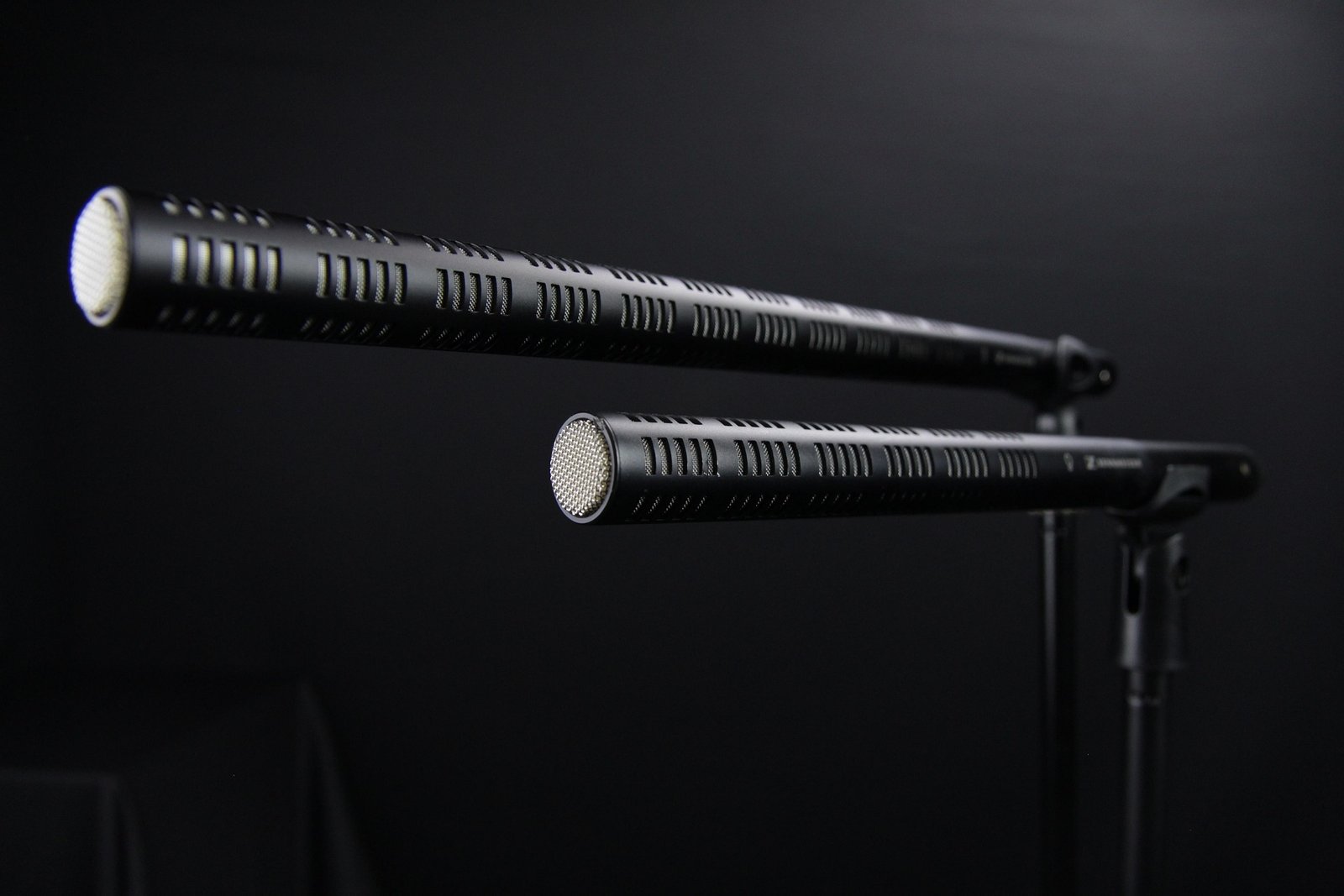
Shotgun Microphone
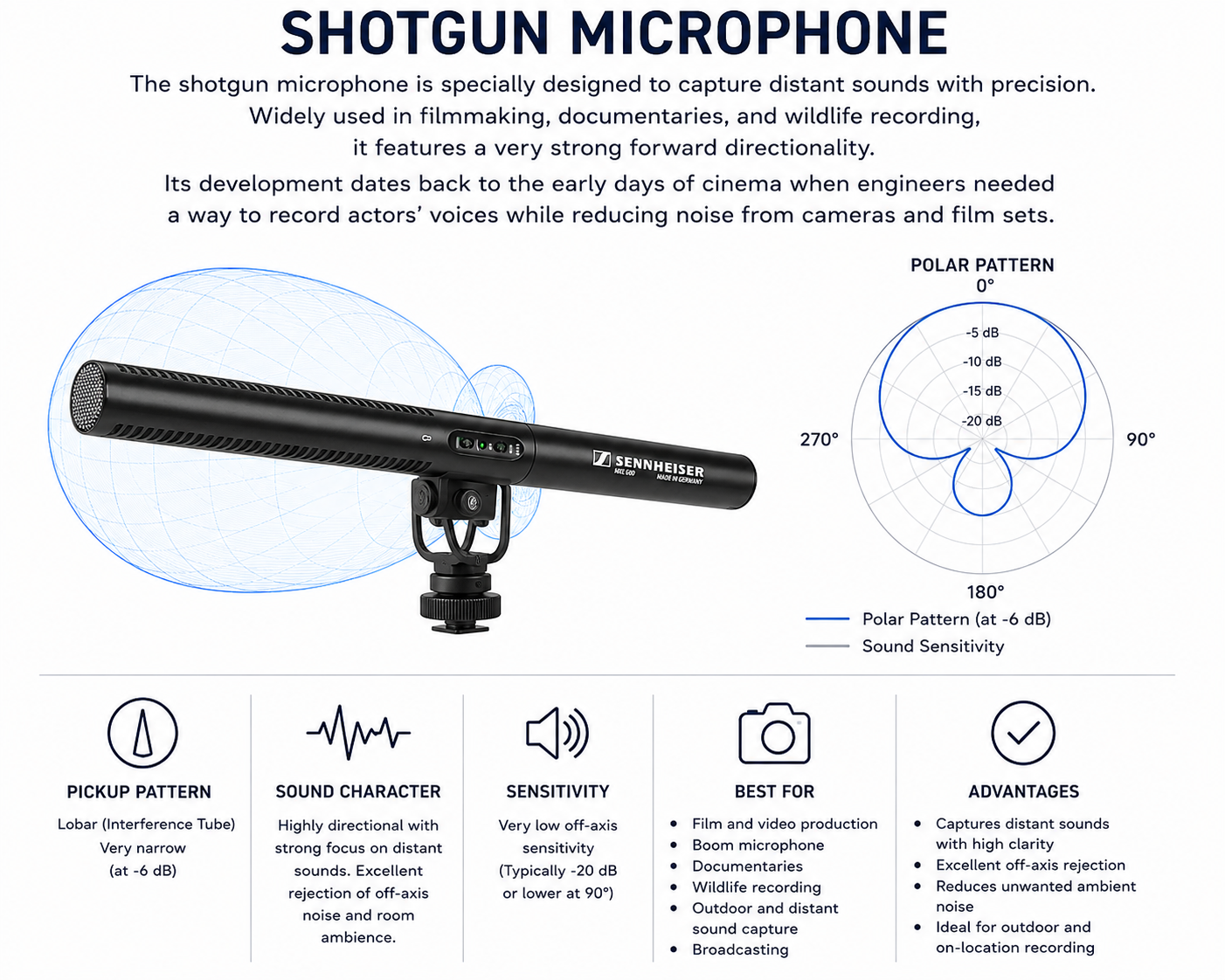
The shotgun microphone is specially designed to capture distant sounds with precision. Widely used in filmmaking, documentaries, and wildlife recording, it features a very strong forward directionality.
Its development dates back to the early days of cinema when engineers needed a way to record actors’ voices while reducing noise from cameras and film sets.
Different Types of Microphones
Piezoelectric Microphone
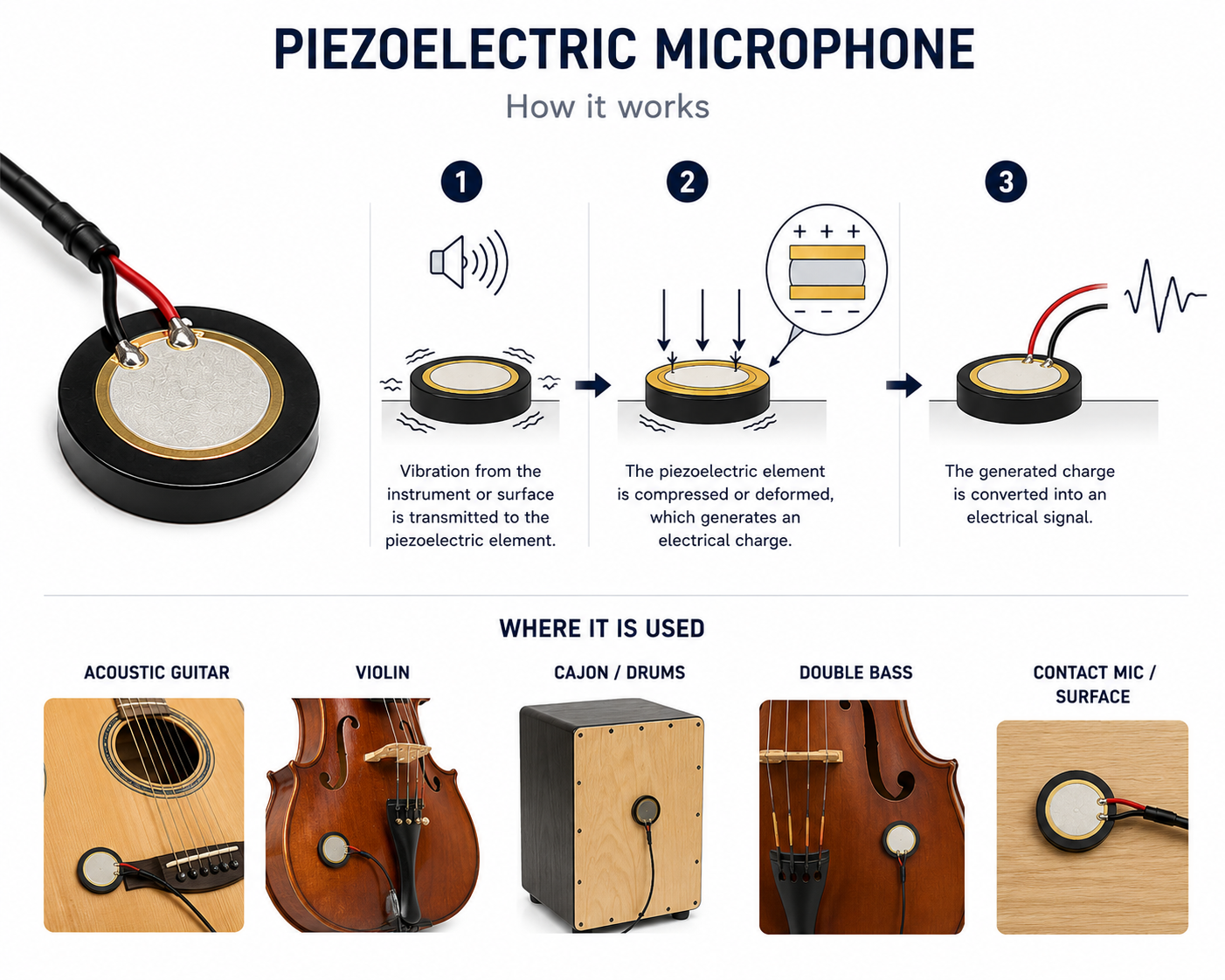
The piezoelectric microphone works using specific materials capable of generating electrical current when pressure or vibration is applied to them.
Simple, durable, and affordable, it is commonly used for contact sound pickup, vibration detection, acoustic instruments, and certain voice transmission applications.
Unlike conventional air-pressure microphones, piezoelectric microphones mainly respond to mechanical vibrations transmitted through solid objects and surfaces.
Electromagnetic Microphone
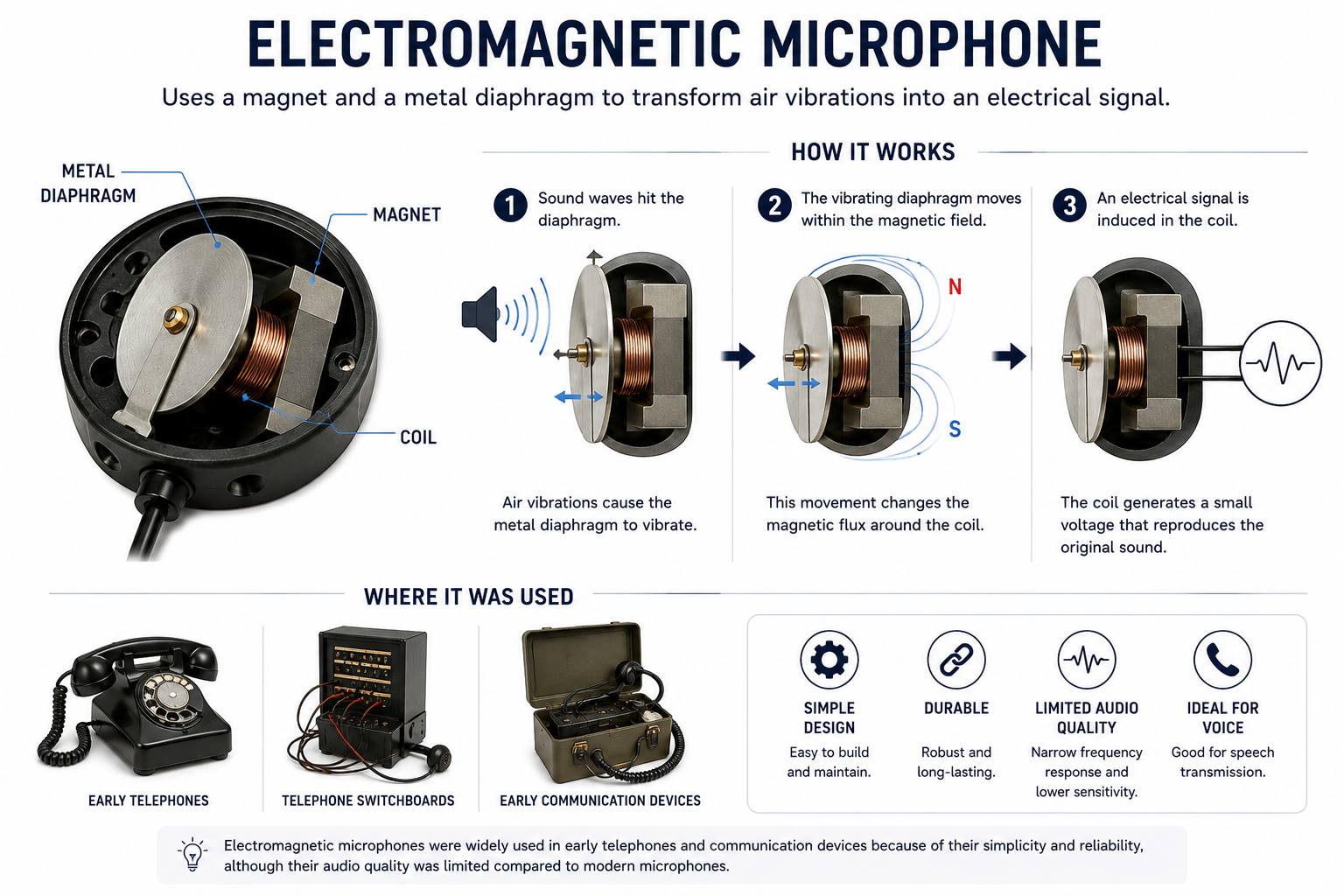
The electromagnetic microphone works by using a metal diaphragm placed near a magnetic field. When sound waves hit the diaphragm, it vibrates according to the air pressure variations.
These vibrations affect the magnetic field and generate a small electrical signal that reproduces the original sound.
Unlike modern condenser microphones, electromagnetic microphones have a limited frequency response and lower sensitivity. However, they are simple, durable, and easy to manufacture.
This type of microphone was widely used in early telephones and communication devices because it provided reliable voice transmission with minimal electronic complexity.
Dynamic Microphone
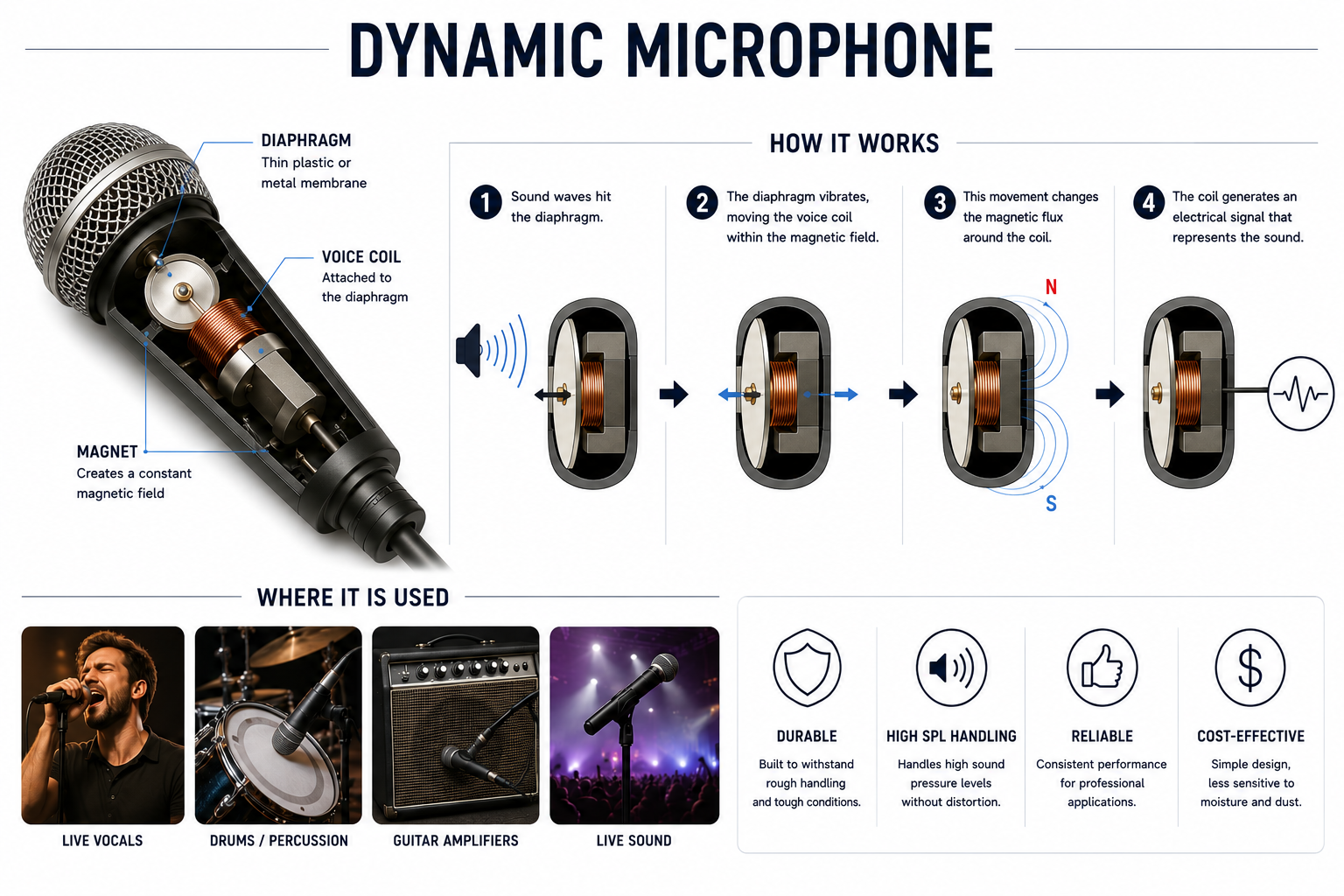
The dynamic microphone operates on a similar principle to the electromagnetic microphone but with a more advanced design.
Reliable, durable, and capable of handling high sound pressure levels, it remains one of the most popular choices for live vocals, drums, and guitar amplifiers.
Ribbon Microphone
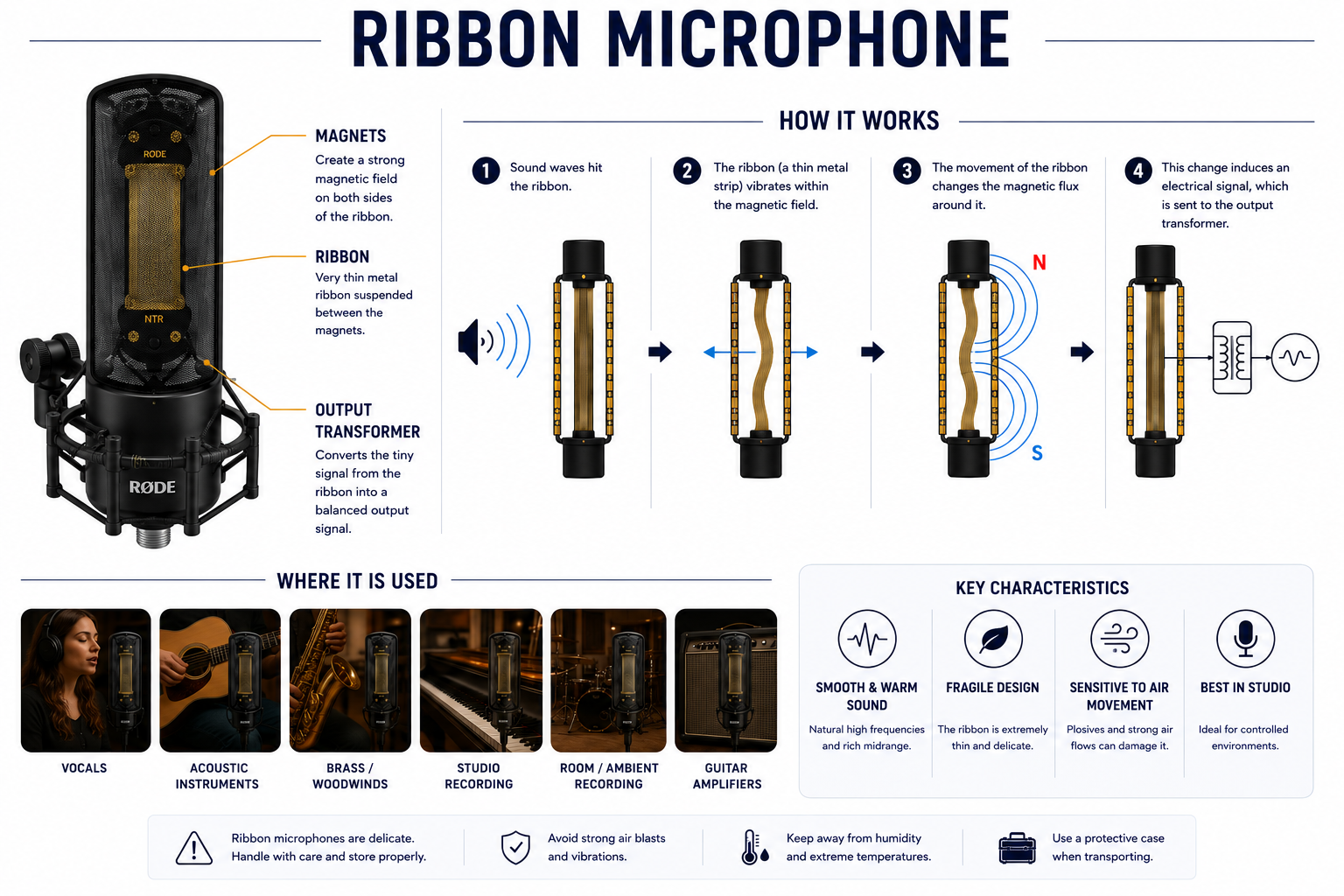
The ribbon microphone is known for its smooth, warm, and natural sound character. It uses a very thin metal ribbon placed inside a magnetic field.
Because of its fragile design and sensitivity to air movement, it is mainly used in studio environments.
Condenser Microphones
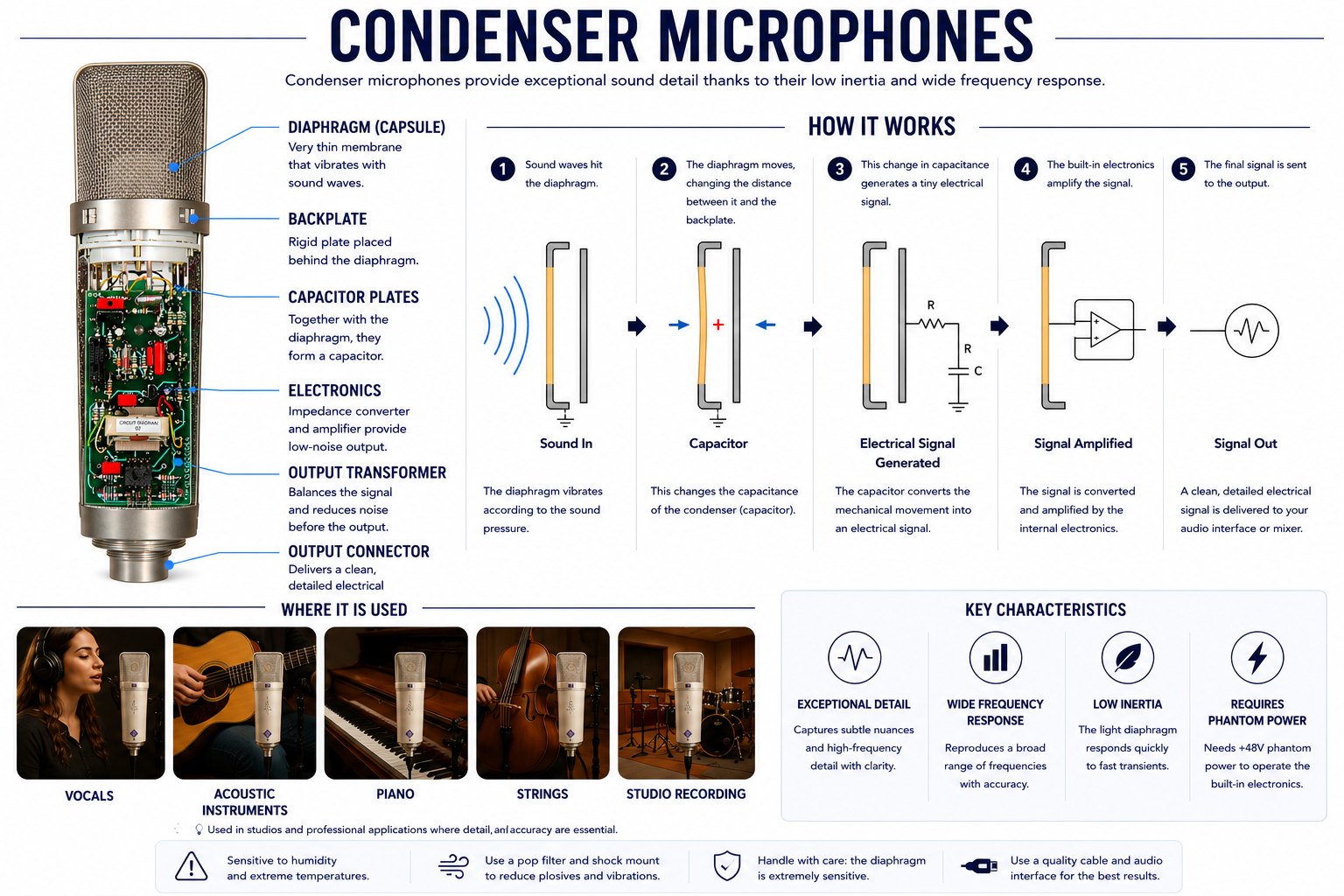
Condenser microphones provide exceptional sound detail thanks to their low inertia and wide frequency response.
They are highly appreciated for:
- vocals,
- acoustic instruments,
- detailed studio recordings.
However, they are more fragile and usually require phantom power.
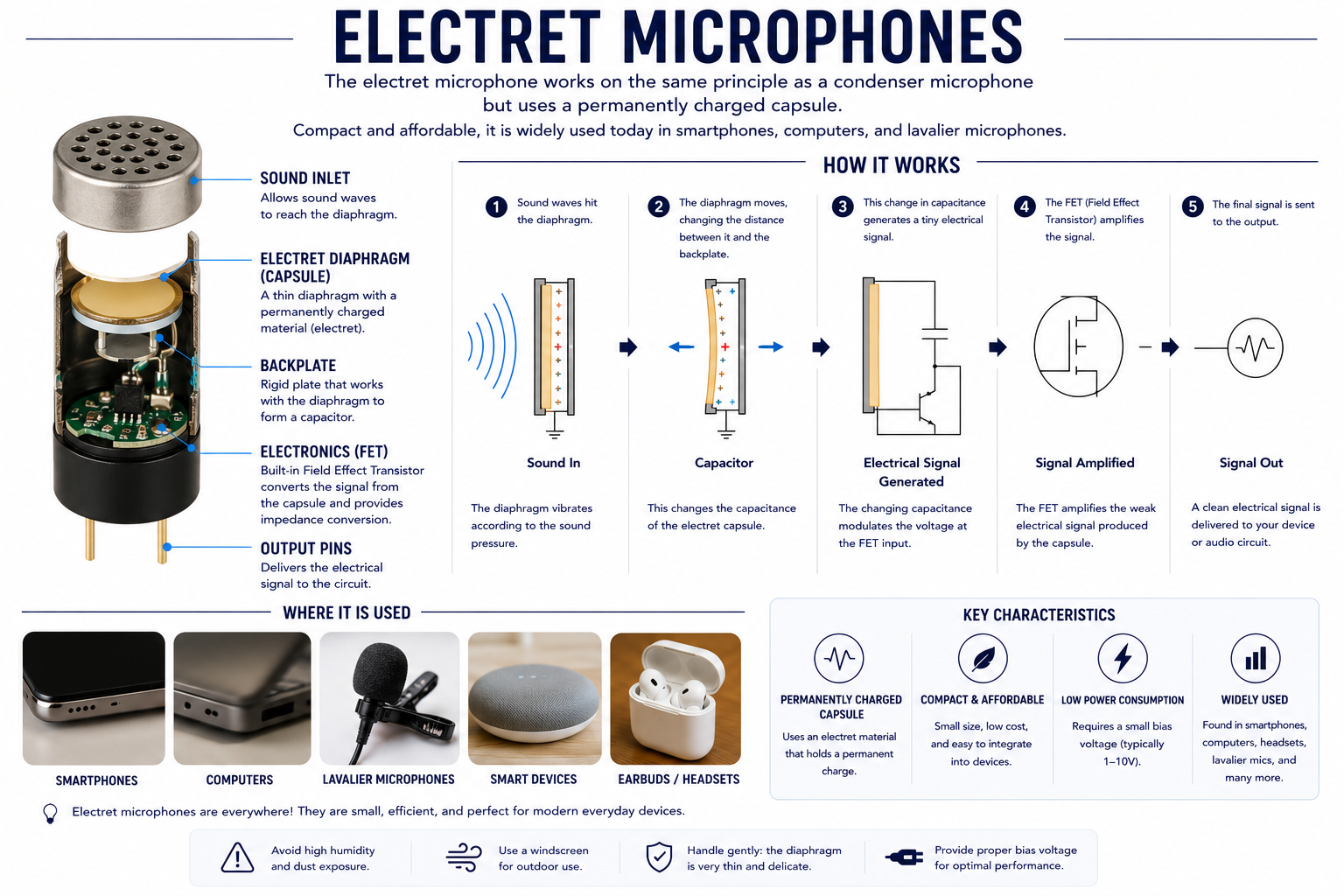
Electret Microphone
The electret microphone works on the same principle as a condenser microphone but uses a permanently charged capsule.
Compact and affordable, it is widely used today in smartphones, computers, and lavalier microphones.
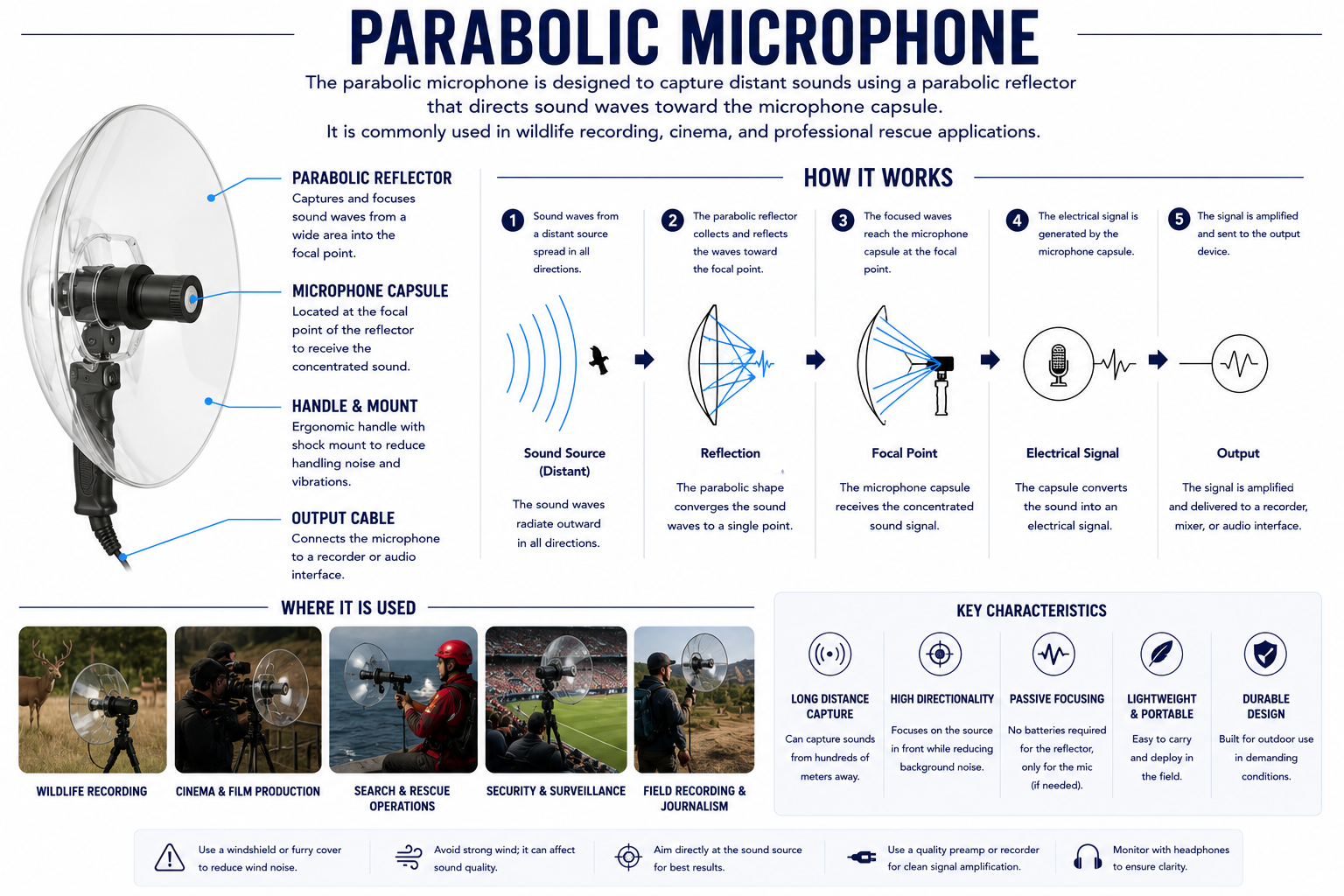
Parabolic Microphone
The parabolic microphone is designed to capture distant sounds using a parabolic reflector that directs sound waves toward the microphone capsule.
It is commonly used in:
- wildlife recording,
- cinema,
- professional surveillance and rescue applications.
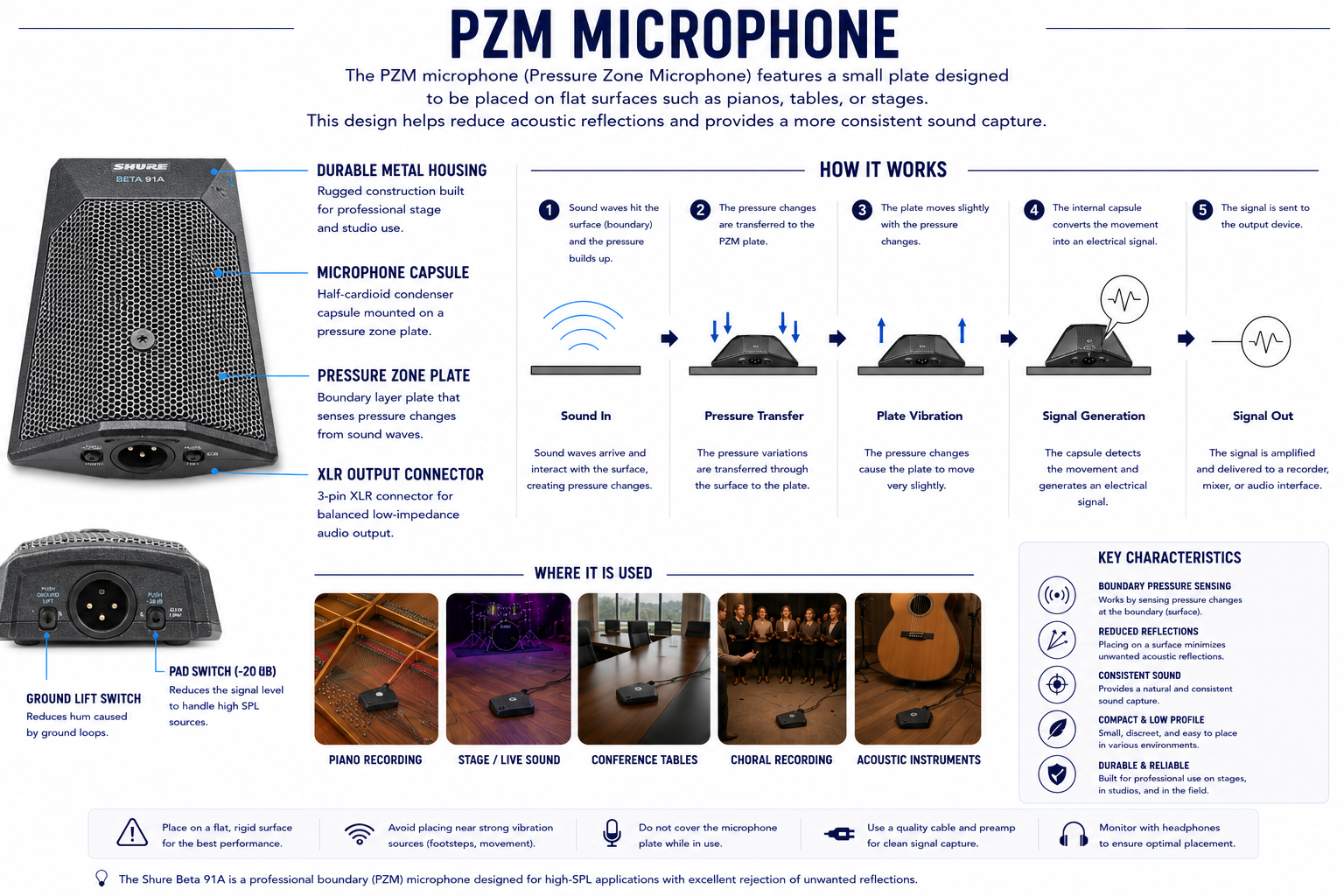
PZM Microphone
The PZM microphone (Pressure Zone Microphone) features a small plate designed to be placed on flat surfaces such as pianos, tables, or stages.
This design helps reduce acoustic reflections and provides a more consistent sound capture.
Conclusion
A microphone is much more than a simple recording device. Each technology and polar pattern has its own advantages depending on the recording environment and intended use. Understanding these differences helps achieve more professional and accurate sound results while choosing the right microphone for every situation.e professional and accurate sound results while choosing the right microphone for every situation.